COSMOS 2475 (743)
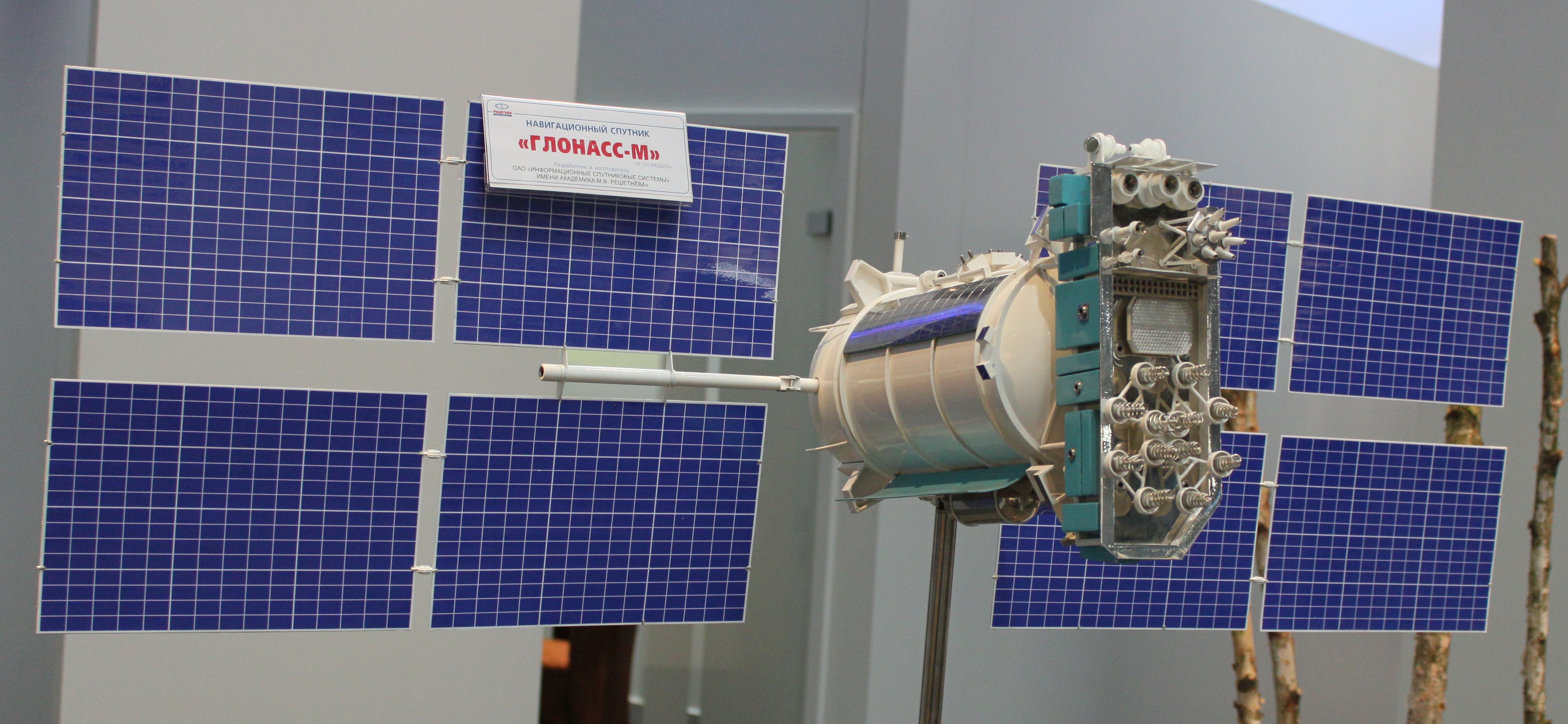
About COSMOS 2475 (743)
Cosmos 2475 (also rendered as Kosmos 2475) is a Russian military satellite operated by the Russian Space Forces and assigned the NORAD catalog identifier 37869. Launched on November 3, 2011, it forms part of the GLONASS constellation — Russia's global satellite navigation system, the counterpart to the American GPS network. Along with two companion satellites, Kosmos 2476 and Kosmos 2477, it was orbited in a single mission designated 2011-064 in the international COSPAR registry, where Cosmos 2475 carries the specific identifier 2011-064C. As of the time of writing, the satellite remains in orbit and is actively tracked by ground-based surveillance networks.
Mission and Purpose
GLONASS, which stands for Globalnaya Navigatsionnaya Sputnikovaya Sistema, is a space-based radionavigation system maintained and operated by the Russian Federation for both military and civil use. First conceived during the Soviet era and brought to initial operational status in the 1990s, the constellation suffered a period of degradation as older satellites failed and replacement launches lagged. A substantial investment program in the 2000s and early 2010s restored the network to full global coverage, and the triple launch that included Cosmos 2475 was part of that sustained replenishment effort.
Navigation satellites of this class broadcast continuous radio signals on multiple frequencies, allowing receivers on the ground, at sea, or in the air to calculate their precise position, velocity, and time by comparing signals from multiple satellites simultaneously visible above the horizon. The more satellites in a constellation, the more robust and accurate the coverage — which is why GLONASS satellites are typically launched in groups of three, delivered to the same orbital plane in a single mission to maximize efficiency and minimize gaps in coverage.
The specific mission parameters of Cosmos 2475 beyond its role as a GLONASS navigation payload are not publicly recorded in the satellite catalog. Its operator designation as a Russian Space Forces asset reflects the military lineage of the GLONASS program, even though the system's positioning signals are made available for civilian and commercial applications worldwide.
Orbit and Tracking
Cosmos 2475 occupies a medium Earth orbit, the standard regime for global navigation satellite systems. This class of orbit — sitting well above the radiation-intensive Van Allen belts and the low-Earth orbital zone crowded with Earth observation and communications satellites, but far below the geostationary arc — offers an effective balance between signal coverage footprint and orbital stability.
The satellite's tracked orbital parameters place its apogee at approximately 19,202 kilometers and its perigee at approximately 19,071 kilometers above Earth's surface. The difference between these two figures — roughly 131 kilometers — indicates a very nearly circular orbit, which is exactly what a navigation satellite requires. A circular orbit ensures that the satellite maintains a consistent altitude and therefore a predictable, stable signal path to receivers below. Any significant eccentricity would introduce complex variations in signal timing and geometry that would complicate the navigation solution.
The orbital inclination is 65.3 degrees relative to the equatorial plane. This inclination is characteristic of GLONASS satellites and is notably steeper than the roughly 55-degree inclination used by GPS satellites. The higher inclination gives GLONASS better coverage at high latitudes, including the Arctic and sub-Arctic regions of Russia and neighboring countries — a deliberate design choice reflecting the geographic priorities of the system's originators.
With an orbital period of approximately 675.7 minutes — just over eleven hours — the satellite completes between two and three full revolutions of Earth each day. GLONASS satellites are designed so that their orbital periods are a specific fraction of a sidereal day, causing the ground track to repeat on a predictable cycle. This repeat geometry is important for system calibration and for ensuring consistent satellite geometry for users at any given location.
The satellite is cataloged under NORAD ID 37869 and is routinely tracked by the United States Space Surveillance Network as well as other ground-based radar and optical systems that monitor the orbital environment. Its position is propagated using standard two-line element sets, which are publicly distributed and form the basis of the tracking data available on this site.
Design and Operator
Cosmos 2475 was manufactured by JSC Information Satellite Systems Reshetnev, the Siberian aerospace company based in Zheleznogorsk (Krasnoyarsk Krai) that has been the primary developer and producer of Russian navigation, communications, and geodetic satellites for decades. Reshetnev — formerly known as NPO PM — is the industrial backbone of the GLONASS program and has produced the overwhelming majority of spacecraft that have flown as part of the constellation since its origins.
The satellite belongs to the GLONASS-M series, the modernized second-generation variant of the GLONASS spacecraft. GLONASS-M satellites introduced expanded signal capabilities compared to the original design, including additional civil frequencies that improved compatibility with international navigation standards and increased the system's utility for non-military users. The series represented a significant step forward in reliability and service life compared to earlier generations.
No mass figure for Cosmos 2475 is publicly listed in the satellite catalog. The GLONASS-M spacecraft in general are understood from open Russian aerospace literature to be substantial satellites — heavier than the first-generation GLONASS vehicles — but the specific figure for this particular unit is not confirmed in the available record and is therefore not stated here.
The Russian Space Forces serve as the operator of the satellite, reflecting the institutional arrangement under which GLONASS operates. While the system's signals are open to civilian use and Russia has entered into interoperability agreements with other global navigation satellite system operators, administrative and operational control of the constellation remains within the military chain of command.
Current Status and Significance
As of the most recently available tracking data, Cosmos 2475 remains in orbit and has not undergone a decay or reentry event. Whether the satellite is currently transmitting navigation signals, operating in a reduced capacity, or has been retired from active service while remaining in orbit is not indicated by publicly available catalog information. Navigation satellites in medium Earth orbit are not consumed rapidly by atmospheric drag — at altitudes near 19,000 kilometers, the atmosphere is effectively nonexistent, and orbital decay occurs on timescales of thousands of years absent any active deorbit maneuver. Cosmos 2475 is therefore expected to remain a trackable object in this orbital regime indefinitely unless a deliberate disposal action is taken.
The group launch that placed Cosmos 2475, Kosmos 2476, and Kosmos 2477 into orbit in November 2011 came during a period of intense focus on restoring and then expanding the GLONASS constellation. That effort succeeded: by the end of 2011 the constellation had reached the full 24-satellite operational configuration required for continuous global coverage. Cosmos 2475 was one of the satellites that contributed to achieving and sustaining that milestone.
The GLONASS program holds strategic importance for Russia as the only country outside the United States to operate a fully global, fully independent satellite navigation system (the European Galileo and Chinese BeiDou systems reaching full global coverage later). The ability to provide positioning, navigation, and timing services without dependence on a foreign system has both military and civilian economic dimensions, and the sustained investment in constellation replenishment through launches like the one that delivered Cosmos 2475 reflects that priority.
From the perspective of the global orbital environment, GLONASS satellites at medium Earth orbit contribute to the growing population of objects in a regime that has historically been less congested than low Earth orbit but is attracting increasing attention as navigation, communications, and other services expand their use of MEO altitudes. Long-lived decommissioned satellites at these altitudes represent a passive debris concern that the space operations community continues to study.
How to Spot It
Cosmos 2475 orbits at an altitude of roughly 19,000 kilometers — approximately fifty times higher than the International Space Station and several times higher than the familiar low-Earth orbit satellites that are routinely visible to the naked eye. At this distance, the satellite is far too faint and too slow-moving across the sky to be seen without specialized optical equipment. It does not produce predictable naked-eye flares or bright passes of the sort associated with large low-orbit platforms.
Observers equipped with tracking telescopes or high-sensitivity cameras capable of reaching faint stellar magnitudes may be able to detect the satellite as a slowly drifting point of light against the star field, but such observations require accurate prediction data and patient technique. The orbital elements for Cosmos 2475, available through this site under NORAD catalog number 37869, can be used with appropriate prediction software to compute the satellite's position and sky track for any location and time.
Altitude history
Apogee and perigee for COSMOS 2475 (743) across 149 days of archived orbital elements (151 element sets, one per day).
Derived from our own archive of CelesTrak orbital elements, sampled every 3 hours. Short windows show drag and station-keeping; they are not a reentry prediction.
Launched with
2 other catalogued objects still in orbit from launch 2011-064 (Proton-M Briz-M | 3 x Glonass-M (Kosmos 2475, Kosmos 2476, Kosmos 2477)).
- COSMOS 2476 (744) · 37867
- COSMOS 2477 (745) · 37868
Sources & further reading
Embed this satellite on your site
Free for editorial use. Attribution back to LowEarth is required.
<iframe src="https://lowearth.app/embed/37869" width="640" height="400" frameborder="0" allow="fullscreen"></iframe>