COSMOS 2477 (745)
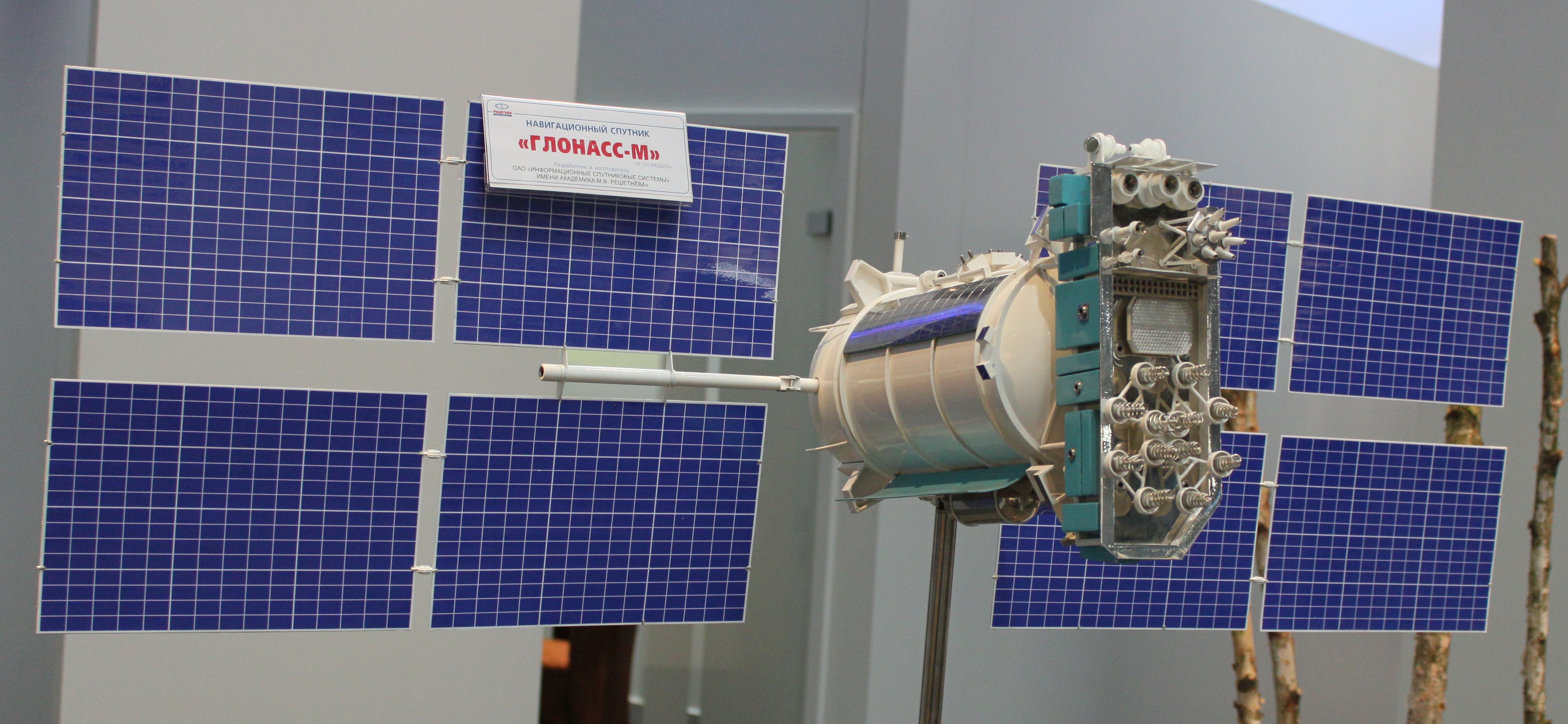
About COSMOS 2477 (745)
Cosmos 2477 is a Russian military satellite launched in November 2011 as part of the GLONASS satellite navigation constellation. Catalogued by the United States Space Surveillance Network under NORAD ID 37868 and carrying the international designator 2011-064B, the spacecraft occupies a medium Earth orbit consistent with the operational shell used by the GLONASS system. It remains in orbit as of the time of writing and continues to be tracked by ground-based sensors worldwide.
Mission and purpose
GLONASS — an acronym for Globalnaya Navigatsionnaya Sputnikovaya Sistema, or Global Navigation Satellite System — is Russia's counterpart to the American GPS, the European Galileo, and the Chinese BeiDou constellations. Originally developed during the Soviet era and declared fully operational in the 1990s before suffering a period of decline, the system was substantially rebuilt and modernized through the 2000s and into the 2010s, with a sustained push to restore and then maintain a full constellation of operational satellites.
Cosmos 2477 forms part of that restoration and maintenance effort. It was launched alongside two companion satellites, Cosmos 2475 and Cosmos 2476, in what is a standard GLONASS deployment practice: placing three satellites into orbit aboard a single launch vehicle to populate the constellation efficiently. The three satellites were deployed together in November 2011, filling or replenishing slots within the constellation's orbital geometry, which is designed to provide continuous global coverage.
The satellite is operated by the Russian Space Forces, the branch of the Russian military responsible for operating space assets in support of national defense. GLONASS itself serves both military and civilian purposes. On the military side, it provides precise positioning, navigation, and timing data to Russian armed forces and affiliated users — functions analogous to how GPS serves the United States military. On the civilian side, GLONASS signals are openly available and have been integrated into commercial devices, including smartphones, vehicle navigation units, and survey equipment, often in combination with GPS receivers to improve accuracy and reliability.
The specific mission status of Cosmos 2477 is not publicly confirmed in available catalogs, and its current operational role within the constellation — whether it is active, in reserve, or serving some reduced function — is not formally disclosed. This is not unusual for Russian military navigation satellites, whose operational details are typically not released to the public.
Orbit and tracking
Cosmos 2477 operates in medium Earth orbit, the regime that all GLONASS and GPS satellites use because it offers the best practical compromise between coverage footprint and signal travel time. Its tracked orbital parameters place the apogee at approximately 19,188 kilometers and the perigee at approximately 19,086 kilometers above Earth's surface. The difference between these two figures is notably small, indicating an orbit that is very close to circular — a characteristic intentionally designed into navigation satellites, which require stable, predictable ground tracks to maintain consistent signal geometry for users on the ground.
The orbital inclination is 65.3 degrees relative to the equator. This is a defining characteristic of the GLONASS orbital shell and distinguishes it from GPS, which uses an inclination of approximately 55 degrees. The steeper inclination of the GLONASS constellation provides somewhat better coverage at high latitudes, including the Arctic regions that are of particular strategic and geographic importance to Russia. This design choice reflects the system's origins and the geographic priorities of its operators.
The orbital period of Cosmos 2477 is approximately 675.7 minutes, or just under eleven and a quarter hours. GLONASS satellites are designed so that they complete exactly eight orbits in the time it takes Earth to complete two sidereal rotations — a resonance that causes the satellite's ground track to repeat on a predictable schedule. This orbital resonance simplifies the task of maintaining consistent coverage patterns across the constellation and makes the system's behavior more predictable for users and operators alike.
The satellite was launched on November 3, 2011. Its COSPAR designator, 2011-064B, identifies it as the second object associated with the sixty-fourth launch of 2011 in the international cataloguing system, with the primary payload designation going to one of its companions. All three satellites from that launch are tracked as separate objects by the Space Surveillance Network.
Design and operator
Cosmos 2477 was manufactured by JSC Information Satellite Systems Reshetnev, a company headquartered in Zheleznogorsk in the Krasnoyarsk region of Russia. Reshetnev — formally known as Aktsionernoye Obshchestvo Informationally-Sputnikovye Sistemy imeni academika M.F. Reshetneva — is the primary industrial contractor responsible for building GLONASS satellites and has been closely associated with the program throughout its history. The company specializes in communications, navigation, and geodetic spacecraft and has manufactured the successive generations of GLONASS satellites from the original first-generation hardware through to the modernized variants developed in the 2000s and 2010s.
The specific generation to which Cosmos 2477 belongs is consistent with the GLONASS-M series, which was the standard production satellite used to rebuild the constellation during the period when Cosmos 2477 was launched, though this article limits its claims to what appears in the verified catalog data. GLONASS-M satellites were developed to improve on the original GLONASS design in several respects, including longer operational lifespan and the addition of a second civil signal, making them more useful to non-military receivers. Satellites of this type have formed the backbone of the operational GLONASS constellation for much of the system's modern history.
The mass of Cosmos 2477 is not recorded in the publicly available tracking catalog for this object, so no figure is given here. The spacecraft is listed as a payload object — as opposed to a rocket body or debris fragment — confirming that it is classified as an intentional, functional satellite in the tracking registry.
Operationally, the satellite falls under the authority of the Russian Space Forces, which manages the country's military space assets. The Space Forces are responsible for launching, monitoring, and controlling satellites that serve defense-related functions, with GLONASS representing one of the most strategically significant programs under their purview.
Significance and current status
The launch of Cosmos 2477, alongside Cosmos 2475 and Cosmos 2476, came during a critical period in GLONASS history. The early 2010s saw Russia working to not only restore the constellation to full global coverage but also to modernize its composition with improved satellites and begin work on next-generation designs. The three-satellite deployment in November 2011 was part of a busy launch cadence during this era, reflecting a sustained national commitment to maintaining the constellation.
GLONASS holds strategic importance for Russia in ways that go beyond navigational convenience. As satellite navigation became deeply embedded in military operations worldwide — guiding precision munitions, synchronizing communications, enabling coordinated logistics — the ability to operate an independent constellation rather than rely on a foreign system became a significant national security priority. Russia's investment in GLONASS through the 2000s and 2010s was driven substantially by this logic.
For civilian users globally, the availability of GLONASS signals alongside GPS has contributed to improvements in positioning accuracy, particularly in dense urban environments where tall buildings block signals from some satellites, or at high latitudes where GPS coverage is less robust. Devices that can receive both constellations have more satellites to choose from at any given moment, which translates to more reliable and precise fixes.
As of the time of writing, Cosmos 2477 remains in orbit and continues to be tracked. Its current operational status within the Russian Space Forces' network is not publicly confirmed. Satellites in this orbital regime can remain in use for many years before being retired to a disposal orbit or decommissioned in place, and some continue to be tracked long after their operational role has ended. Whether Cosmos 2477 is actively contributing navigation signals to the GLONASS constellation, held in reserve, or simply being maintained in its current orbit is not indicated in publicly available records.
How to spot it
Cosmos 2477 orbits at an altitude of roughly 19,100 kilometers, placing it deep in medium Earth orbit and far above the low-altitude range where satellites are typically visible to the naked eye. At this distance, the satellite subtends an extremely small angle as seen from the ground and reflects comparatively little sunlight to any given observer. It is not a practical target for casual visual observation with the unaided eye under normal circumstances.
Observers using optical telescopes — particularly those equipped for tracking moving objects — may be able to detect it under favorable conditions, as is the case with other medium Earth orbit satellites. However, it is not among the objects commonly sought out by satellite-watching enthusiasts, who typically focus on the much brighter and more easily visible objects in low Earth orbit such as the International Space Station or large rocket bodies. For precise current positional data, the LowEarth tracking platform provides up-to-date predictions based on the latest available orbital elements.
Altitude history
Apogee and perigee for COSMOS 2477 (745) across 149 days of archived orbital elements (151 element sets, one per day).
Derived from our own archive of CelesTrak orbital elements, sampled every 3 hours. Short windows show drag and station-keeping; they are not a reentry prediction.
Launched with
2 other catalogued objects still in orbit from launch 2011-064 (Proton-M Briz-M | 3 x Glonass-M (Kosmos 2475, Kosmos 2476, Kosmos 2477)).
- COSMOS 2476 (744) · 37867
- COSMOS 2475 (743) · 37869
Sources & further reading
Embed this satellite on your site
Free for editorial use. Attribution back to LowEarth is required.
<iframe src="https://lowearth.app/embed/37868" width="640" height="400" frameborder="0" allow="fullscreen"></iframe>