COSMOS 2476 (744)
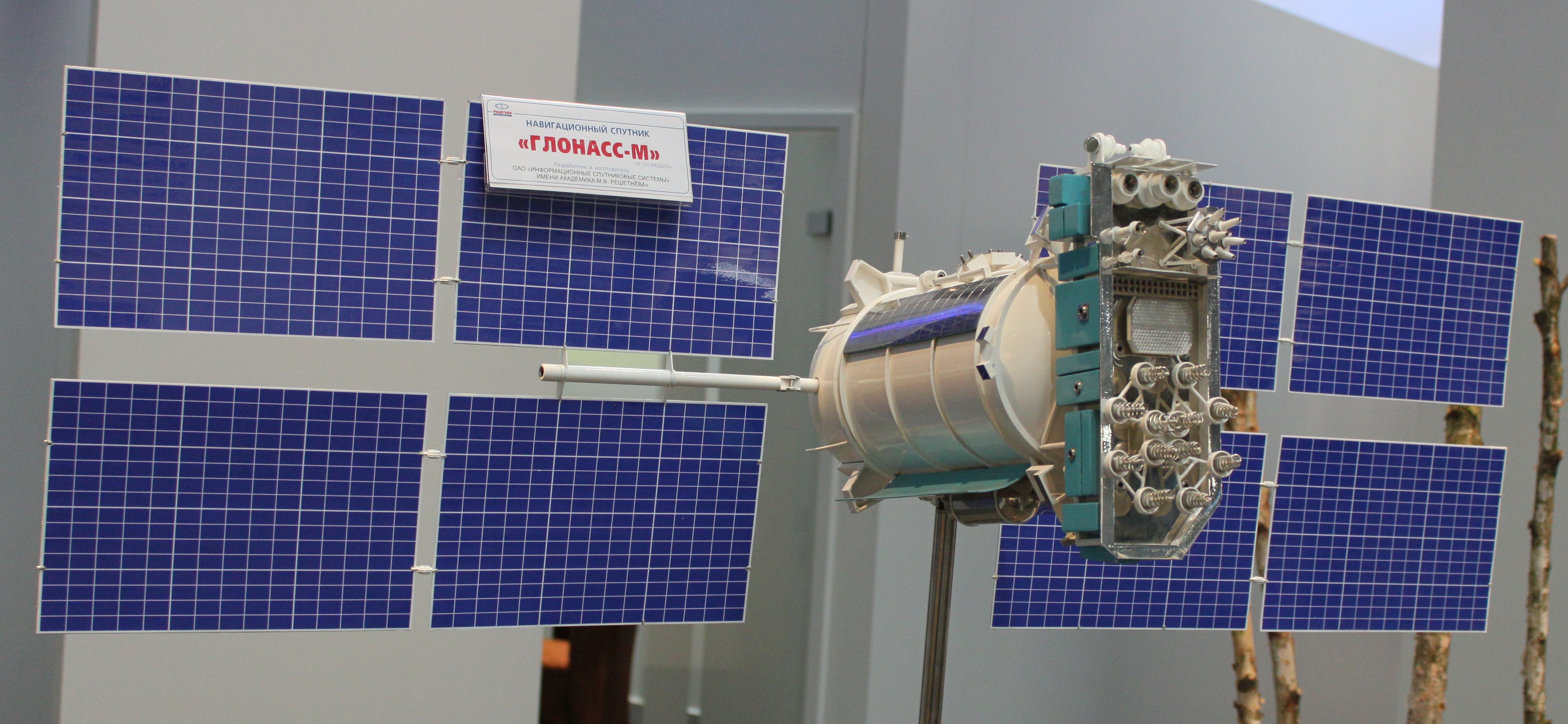
About COSMOS 2476 (744)
Cosmos 2476 (also rendered as Kosmos 2476 and cataloged under NORAD ID 37867) is a Russian military navigation satellite operating as part of the GLONASS constellation. Launched on November 3, 2011, it occupies a medium Earth orbit and was placed into service alongside two companion satellites, Cosmos 2475 and Cosmos 2477, as part of a single coordinated deployment. The satellite is operated by the Russian Space Forces and was manufactured by JSC Information Satellite Systems Reshetnev, the Siberian aerospace company that has long served as the primary industrial backbone of the GLONASS program. As of the time of writing, Cosmos 2476 remains in orbit, carrying the international designator 2011-064A.
Mission and Purpose
Cosmos 2476 belongs to the GLONASS satellite navigation system, Russia's global equivalent to the American GPS network. GLONASS — an acronym for Globalnaya Navigatsionnaya Sputnikovaya Sistema — was originally developed during the Soviet era and has been continuously maintained, modernized, and expanded by successive Russian governments and military authorities. The system provides positioning, navigation, and timing services across the globe, with applications spanning civilian navigation, precision agriculture, surveying, aviation, and maritime uses, as well as the military purposes that historically drove its creation.
The satellite was launched as one of three additions to the constellation in late 2011, a period during which Russian authorities were actively working to restore and maintain full operational coverage following earlier setbacks to the program. Launching satellites in groups of three is a characteristic feature of the GLONASS replenishment strategy, allowing a single Proton-M rocket to deliver multiple spacecraft to their target orbital slots in a single mission. Cosmos 2476, Cosmos 2475, and Cosmos 2477 collectively contributed to filling out one of the three orbital planes that constitute the GLONASS constellation architecture.
Although the satellite is listed under the generic "Cosmos" military designation — a naming convention applied broadly to Soviet and Russian military space hardware across many decades and many mission types — its role within GLONASS is well established through public tracking data and official Russian space program announcements. The specific operational status and detailed mission parameters of Cosmos 2476 are not publicly recorded in the standard catalog entries, which is not unusual for assets operated under the Russian Space Forces.
Orbit and Tracking
Cosmos 2476 occupies a medium Earth orbit highly characteristic of global navigation satellite systems. Its current tracked orbital parameters show an apogee of approximately 19,195 kilometers and a perigee of approximately 19,078 kilometers above Earth's surface, describing a nearly circular orbit with very little eccentricity. The minimal difference between the high and low points of the orbit — roughly 117 kilometers — reflects the operational requirement for navigation satellites to maintain consistent altitude and therefore consistent signal geometry for ground-based receivers.
The satellite's orbital inclination is 65.3 degrees relative to the equatorial plane. This inclination distinguishes GLONASS from GPS in a notable and practically significant way: GPS satellites operate at an inclination of approximately 55 degrees, while the steeper inclination of the GLONASS constellation provides somewhat better coverage at high northern latitudes, including the entirety of Russian territory. This was an intentional design choice reflecting the geographic priorities of the Soviet Union when the system was first conceived.
The orbital period of Cosmos 2476 is approximately 675.7 minutes, or just over eleven hours and fifteen minutes per revolution. This places it in the category of semi-synchronous orbits that navigation constellations favor — long enough to provide extended coverage from any given point, but short enough that the full constellation of satellites can together provide continuous global coverage. Over the course of a single day, a receiver on the ground will see multiple GLONASS satellites rise and set, with the geometry shifting in a regular, predictable pattern.
At an orbital altitude of roughly 19,100 to 19,200 kilometers, Cosmos 2476 is well above the low Earth orbit band occupied by the International Space Station or Earth observation satellites, and well below the geostationary arc at approximately 35,786 kilometers. This mid-altitude regime subjects the satellite to radiation from the Van Allen belts, which is one reason navigation satellites must be hardened against charged particle effects. The mass of Cosmos 2476 is not publicly listed in the available catalog data.
Design and Operator
Cosmos 2476 was manufactured by JSC Information Satellite Systems Reshetnev, headquartered in Zheleznogorsk (formerly known as Krasnoyarsk-26) in the Krasnoyarsk region of Siberia. Reshetnev — often abbreviated as ISS Reshetnev or simply ISS — has been the designated prime contractor for GLONASS spacecraft for decades, producing successive generations of the satellites from the original GLONASS design through the GLONASS-M and GLONASS-K series. The company has deep institutional expertise in navigation and communications satellite construction and is one of the most consequential aerospace manufacturers in Russia's space industrial base.
The satellite operates under the authority of the Russian Space Forces, the branch of the Russian Armed Forces responsible for military space activities. The Russian Space Forces oversee the launch, operation, and management of military satellite assets including the GLONASS constellation, coordinating with civilian users and agencies but maintaining ultimate control over the system's operational disposition.
Cosmos 2476 was launched on November 3, 2011. The launch took place in Eastern Standard / Eastern Daylight time at 20:00 EDT, consistent with a late-evening local time on the Eastern seaboard, though Russian launch operations of this type typically originate from Baikonur Cosmodrome in Kazakhstan, where local conditions rather than American time zones are operationally relevant. Groupings of three GLONASS satellites have historically flown on Proton-M launch vehicles with Breeze-M upper stages, though the specific launch vehicle for this mission is not among the verified facts available for this entry.
Significance and Current Status
The 2011 launch campaign that placed Cosmos 2476 into orbit came at a critical time for the GLONASS program. A launch failure in December 2010 had destroyed three GLONASS-M satellites before they could reach orbit, a high-profile setback that temporarily reduced the constellation's operational capacity and drew public criticism of the program's management. The successful deployment of the 2011 satellites, including Cosmos 2476 and its two companions, helped restore confidence in the program's trajectory and contributed to re-establishing full global coverage.
From a broader strategic standpoint, a fully operational GLONASS constellation has been a stated national priority for Russia for many years. The system reduces Russian dependence on foreign navigation infrastructure — particularly American GPS — for both military operations and civilian economic activity. Navigation satellite systems have become foundational infrastructure for modern economies, embedded in transportation, logistics, communications timing, and precision industry, which gives their continued operation a significance well beyond traditional military space programs.
As of current catalog records, Cosmos 2476 remains in orbit. Its continued presence in the medium Earth orbit band can be confirmed through standard space surveillance tracking. Whether the satellite remains operationally active within the GLONASS network, or has been retired to a reserve or decommissioned status, is not definitively established in publicly available sources. Navigation satellite constellations routinely include a mix of active, spare, and retired spacecraft, and individual satellite operational status is not always announced in real time by operators.
How to Spot It
Cosmos 2476 is not generally considered a naked-eye object under typical observing conditions. At an altitude of approximately 19,100 to 19,200 kilometers, it is vastly more distant than satellites in low Earth orbit, such as the International Space Station, which circles at only a few hundred kilometers altitude. At such distances, reflected sunlight from a satellite the size of a GLONASS spacecraft is far too faint to be seen without optical aid, and even with amateur telescopes, tracking such an object requires careful planning and equipment suited to faint, slow-moving targets.
For observers with appropriate tracking software and motorized telescope mounts, Cosmos 2476 is technically accessible. Its NORAD ID — 37867 — can be entered into any standard satellite tracking application to generate current positional predictions. Because of its high altitude and consequently slow angular motion across the sky, it moves far more deliberately than low-orbit objects, drifting rather than streaking. Observers interested in navigating the wider GLONASS constellation as an observing project will find that these satellites, while challenging, are distinguishable from stars by their steady, methodical motion against the fixed stellar background.
Altitude history
Apogee and perigee for COSMOS 2476 (744) across 149 days of archived orbital elements (151 element sets, one per day).
Derived from our own archive of CelesTrak orbital elements, sampled every 3 hours. Short windows show drag and station-keeping; they are not a reentry prediction.
Launched with
2 other catalogued objects still in orbit from launch 2011-064 (Proton-M Briz-M | 3 x Glonass-M (Kosmos 2475, Kosmos 2476, Kosmos 2477)).
- COSMOS 2477 (745) · 37868
- COSMOS 2475 (743) · 37869
Sources & further reading
Embed this satellite on your site
Free for editorial use. Attribution back to LowEarth is required.
<iframe src="https://lowearth.app/embed/37867" width="640" height="400" frameborder="0" allow="fullscreen"></iframe>