COSMOS 2460 (732)
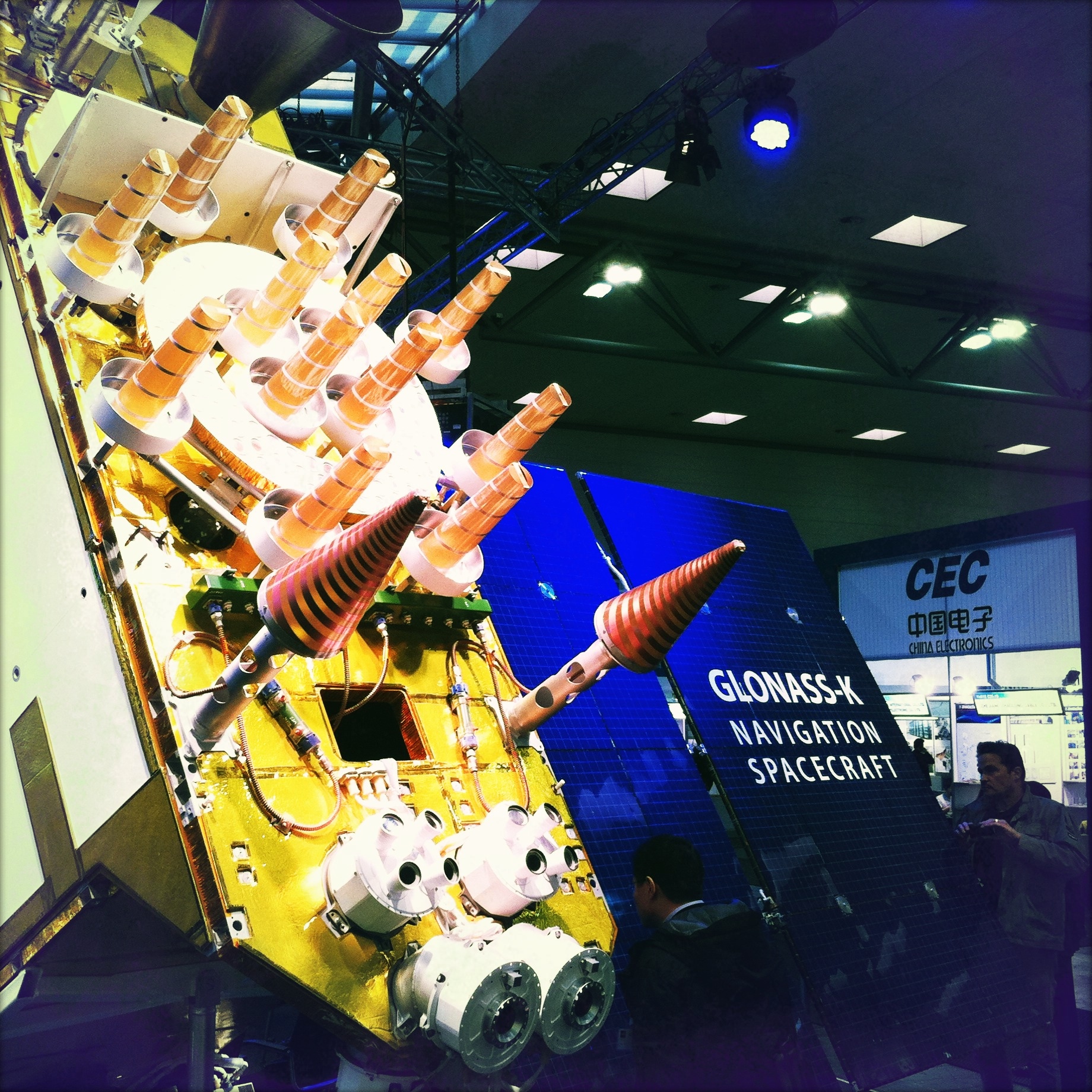
About COSMOS 2460 (732)
Cosmos 2460 (also rendered as Kosmos 2460) is a Russian military satellite launched in late February 2010 as a component of the GLONASS constellation, Russia's Global Navigation Satellite System. Carrying the NORAD catalog identifier 36402 and the international designator 2010-007C, the spacecraft was one of three navigation satellites dispatched to orbit in a single launch event, joining Kosmos 2459 and Kosmos 2461 as part of a coordinated replenishment mission for the constellation. As of the most recent catalog data, the satellite remains in orbit and continues to occupy a slot in the medium Earth orbit band consistent with GLONASS operational parameters.
Mission and Purpose
GLONASS — an acronym for Globalnaya Navigatsionnaya Sputnikovaya Sistema — is Russia's counterpart to the American GPS network. Like GPS, it provides continuous, global positioning, navigation, and timing services by maintaining a constellation of satellites distributed across multiple orbital planes, allowing receivers on the ground to calculate their position by comparing signals from several satellites simultaneously. The system has both civilian and military applications, and its satellites are formally designated under the Kosmos naming convention, a long-standing Russian practice of assigning generic military satellite names regardless of the specific payload type.
Kosmos 2460 was launched as part of a broader Russian effort during the late 2000s and early 2010s to restore and then expand the GLONASS constellation, which had suffered significant degradation in the years following the dissolution of the Soviet Union. By grouping three satellites in a single launch, Russian Space Forces and the associated civilian space authority could efficiently fill multiple constellation slots in a single mission, a strategy that has been a hallmark of GLONASS replenishment campaigns.
The specific mission parameters assigned to Kosmos 2460 within the GLONASS constellation — including its designated slot and the orbital plane it occupies — are consistent with standard GLONASS operational practice. Its mission type and operational status are not formally recorded in the public satellite catalog, which is typical for military-designated spacecraft of this class. Whether the satellite is actively contributing navigation signals, has been placed in a maintenance or reserve mode, or has reached end of operational life is not publicly confirmed.
Orbit and Tracking
Kosmos 2460 operates in medium Earth orbit, the standard orbital regime for all GLONASS satellites. Current tracking data places its apogee at approximately 19,142 km and its perigee at approximately 19,131 km above Earth's surface — a difference of only about 11 km, meaning the orbit is very nearly circular. This near-perfect circularity is characteristic of operational GLONASS satellites, which require consistent geometry and predictable signal travel times to deliver accurate navigation data to ground-based receivers.
The satellite's orbital inclination is 65.4°, a value that is characteristic of the GLONASS constellation and differs notably from GPS satellites, which maintain an inclination of approximately 55°. This steeper inclination gives GLONASS somewhat better coverage at high northern latitudes — including much of the Russian landmass — compared to GPS, a deliberate design choice that reflects the system's origins as a Soviet military navigation asset intended to function reliably across all of Russia's territory.
The orbital period of Kosmos 2460 is approximately 675.7 minutes, or just over eleven and a quarter hours. GLONASS satellites are specifically designed so that the Earth completes exactly seventeen revolutions for every eight completed orbits of a GLONASS satellite, producing a repeating ground track pattern that helps stabilize the constellation's coverage geometry over time. The orbital altitude and period of Kosmos 2460 are consistent with this design philosophy.
For tracking purposes, the satellite is cataloged under NORAD ID 36402, which allows it to be precisely followed by ground-based radar networks and incorporated into publicly available two-line element sets. Its international designator, 2010-007C, identifies it as the third cataloged object — hence the "C" suffix — associated with the seventh launch of 2010. The satellite was placed in orbit by a Proton-M launch vehicle with a DM-3 upper stage, a combination that has been the workhorse of GLONASS replenishment launches. The launch took place on February 28, 2010.
Design and Operator
Kosmos 2460 was manufactured by JSC Information Satellite Systems Reshetnev, known in Russian as AO Reshetnyov, headquartered in Zheleznogorsk (formerly Krasnoyarsk-26) in Siberia. Reshetnev has been the primary developer and manufacturer of GLONASS spacecraft since the inception of the program and remains the sole industrial contractor for the constellation's navigation satellites. The company has produced successive generations of GLONASS hardware, from the original first-generation satellites through the current GLONASS-K series.
Based on its launch date and position in the constellation replenishment timeline, Kosmos 2460 is most likely a member of the GLONASS-M series, the second-generation upgraded variant that introduced civilian signal enhancements and extended operational lifespans compared to the original GLONASS design. The GLONASS-M satellites transmit navigation signals on two frequency bands and have a design lifespan that, under nominal conditions, is measured in years. However, the mass of the satellite is not recorded in the public catalog, and no specific technical parameters beyond those derived from orbital tracking are publicly confirmed for this individual spacecraft.
The satellite is formally operated by the Russian Space Forces, which holds operational authority over the military aspects of the GLONASS system, though the Russian Space Agency (Roscosmos) and the relevant governmental bodies share oversight of the system's civilian navigation services. Russia is the owner country of record for the spacecraft.
Significance and Current Status
The launch of Kosmos 2460 and its two companion satellites in early 2010 was part of a crucial phase in the reconstruction of the GLONASS constellation. Through the 1990s, as Russia's post-Soviet economic difficulties constrained its space program, the number of operational GLONASS satellites fell sharply, at times dropping low enough that continuous global coverage was impossible. A sustained national commitment to rebuilding the constellation through the 2000s, backed by significant government investment, gradually reversed this decline.
By 2010, Russia was close to restoring full operational capacity, and launches such as the one that deployed Kosmos 2459, 2460, and 2461 were instrumental in reaching that milestone. Full constellation restoration — meaning the constellation had enough healthy satellites to provide continuous, global navigation coverage — was declared later in 2011, a significant achievement for Russian space capabilities and a moment of strategic importance for both military navigation applications and Russia's growing civilian GNSS market.
For the broader landscape of global navigation satellite systems, GLONASS is significant as the only fully operational non-American GNSS during much of the period when Kosmos 2460 was launched and initially operated. The existence of a second independent global navigation system provided redundancy for users equipped with dual-system receivers and was a point of considerable strategic relevance for nations seeking alternatives or supplements to GPS.
Kosmos 2460 remains cataloged as an in-orbit object. Its current operational status within the GLONASS constellation — active, reserve, or retired — is not publicly available from the satellite catalog. Satellites in this orbital regime are not subject to atmospheric drag in any meaningful sense and will remain in orbit for extraordinarily long periods absent active deorbit maneuvers, making ongoing tracking relevant for space situational awareness purposes regardless of whether the spacecraft is functionally active.
How to Spot It
At an altitude of roughly 19,100 km, Kosmos 2460 orbits far beyond the low Earth orbit regime where most visually observable satellites reside. At medium Earth orbit distances, the satellite subtends an extremely small angle as seen from the ground and reflects correspondingly little sunlight to an observer. It is not considered a bright or readily observable object with the naked eye under typical circumstances.
Dedicated observers using moderate to large aperture telescopes and precise ephemeris data derived from its NORAD catalog entry may be able to detect it as a slow-moving, faint point of light during favorable illumination geometry — when the satellite is in sunlight and the observer is in or near darkness. However, for the vast majority of users, Kosmos 2460 is a satellite of navigational rather than visual interest, tracked through radio signals and orbital mechanics rather than direct visual observation. The most practical way to follow its orbital position is via the two-line element data associated with NORAD ID 36402, which is updated regularly by space surveillance networks.
Altitude history
Apogee and perigee for COSMOS 2460 (732) across 147 days of archived orbital elements (149 element sets, one per day).
Derived from our own archive of CelesTrak orbital elements, sampled every 3 hours. Short windows show drag and station-keeping; they are not a reentry prediction.
Related satellites
Sources & further reading
Embed this satellite on your site
Free for editorial use. Attribution back to LowEarth is required.
<iframe src="https://lowearth.app/embed/36402" width="640" height="400" frameborder="0" allow="fullscreen"></iframe>