COSMOS 2457 (733)
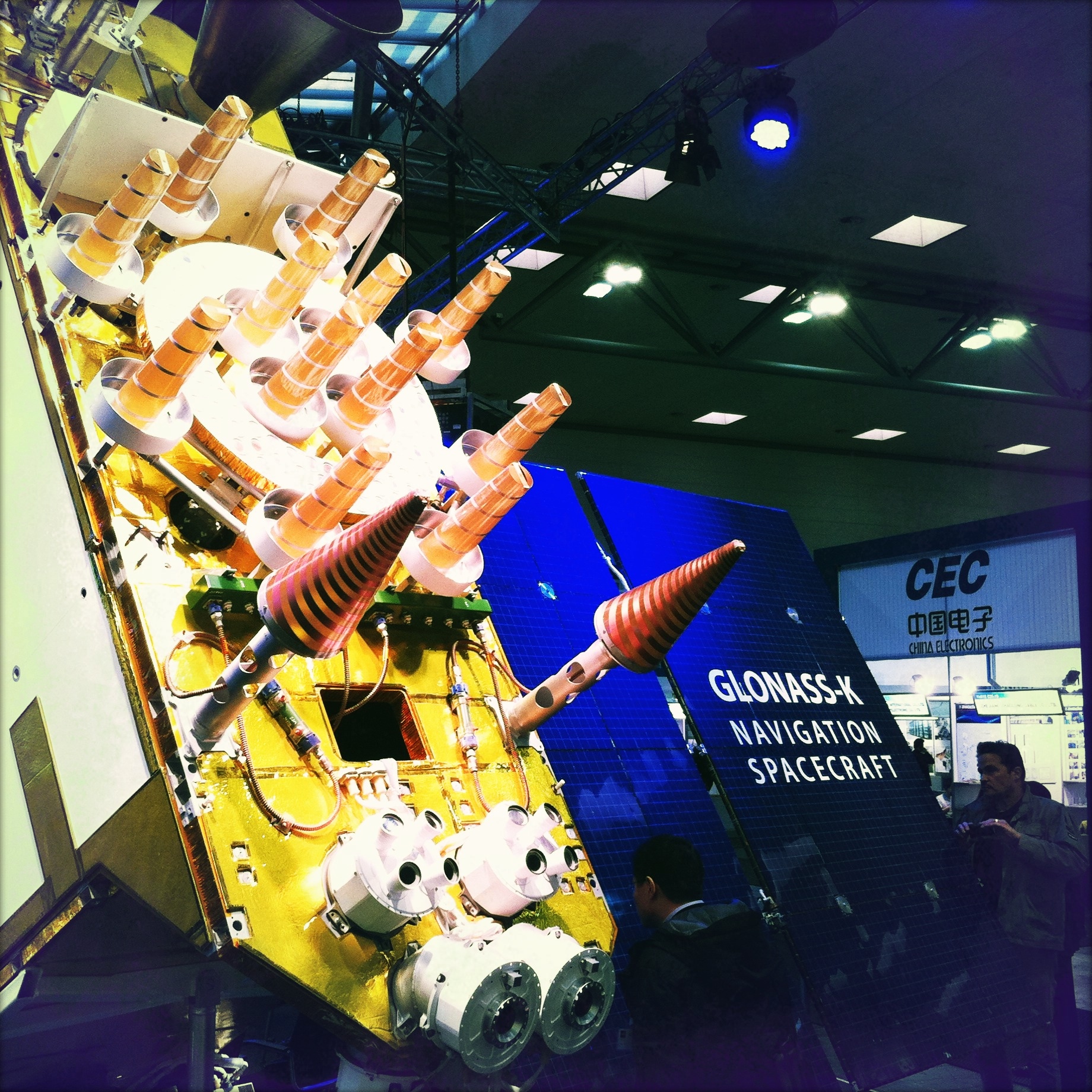
About COSMOS 2457 (733)
Cosmos 2457 (also rendered as Kosmos 2457, and catalogued under NORAD ID 36112) is a Russian military satellite operating as a component of the GLONASS global navigation satellite system. Launched in December 2009 and placed into a medium Earth orbit, it was one of three satellites delivered to orbit together in a single mission aimed at sustaining and expanding Russia's space-based navigation infrastructure. The spacecraft is operated by the Russian Space Forces and was manufactured by JSC Information Satellite Systems Reshetnev, the primary industrial organization responsible for building GLONASS constellation satellites. As of the time of writing, the satellite remains in orbit.
Mission and Purpose
GLONASS — an acronym for Globalnaya Navigatsionnaya Sputnikovaya Sistema, meaning Global Navigation Satellite System — is Russia's counterpart to the American GPS, the European Galileo, and the Chinese BeiDou systems. Developed during the Soviet era and maintained through the post-Soviet period, GLONASS provides positioning, velocity, and timing data to military and civilian users alike, and has long been treated as a strategic national asset by Russian defense and space authorities.
Cosmos 2457 was launched as part of a coordinated effort to replenish and strengthen the GLONASS constellation at a critical period in the system's history. Russia had been working to restore full global coverage after years of orbital degradation, and the late 2000s saw a series of grouped launches intended to bring the constellation back to full operational strength. This satellite flew alongside two sister spacecraft — Cosmos 2456 and Cosmos 2458 — all three of which were delivered to orbit on the same launch vehicle in December 2009, a typical practice for GLONASS replenishment missions that allows efficient use of a single launch to fill multiple orbital slots simultaneously.
The specific operational mission type and current mission status of Cosmos 2457 are not publicly recorded in the satellite catalog, which is not unusual for assets operated by the Russian Space Forces. Whether the satellite is actively contributing navigation signals, held in reserve, or has transitioned out of active service is not confirmed in open-source records. The satellite carries no publicly disclosed mass figure in the catalog entry.
Orbit and Tracking
Cosmos 2457 occupies a medium Earth orbit that is characteristic of global navigation satellite systems. Its apogee stands at approximately 19,143 km above Earth, and its perigee is approximately 19,130 km, reflecting a near-perfectly circular orbit — the two values differ by only about 13 km, meaning the satellite maintains an essentially constant altitude throughout each revolution. This circular geometry is deliberate: navigation satellites depend on predictable, stable signal travel times, and any significant eccentricity in the orbit would introduce variability that would complicate precise positioning calculations on the ground.
The orbital inclination of 65.0° is a defining characteristic of the GLONASS constellation and distinguishes it from GPS, which uses a lower inclination of approximately 55°. The higher inclination of GLONASS orbits means the satellites pass over higher latitudes — including the polar and sub-polar regions that encompass much of Russia's territory — with greater frequency and coverage than GPS satellites do. This was a deliberate design choice rooted in the geographic and strategic priorities of the system's Soviet-era architects.
With an orbital period of approximately 675.7 minutes, Cosmos 2457 completes just under two and a quarter orbits per day. This period is also intentional: GLONASS satellites are designed so that they complete exactly eight orbits every three sidereal days, which causes their ground tracks to repeat on a consistent three-day cycle. This repeating ground-track property simplifies the management of constellation geometry and ensures predictable coverage patterns.
The satellite is tracked continuously by the global network of radar and optical sensors that feed into the publicly accessible orbital catalog maintained by United States Space Command, which assigned Cosmos 2457 the NORAD catalog number 36112. Its international designator under the COSPAR system is 2009-070B, indicating it was the second catalogued object from the 70th launch of 2009. Tracking data confirms it has not decayed and remains in orbit.
Design and Operator
Cosmos 2457 was built by JSC Information Satellite Systems Reshetnev, a company headquartered in Zheleznogorsk (formerly known as Krasnoyarsk-26), in Russia's Siberian Krasnoyarsk Krai. Reshetnev, often abbreviated as ISS Reshetnev, is the principal developer and manufacturer of the GLONASS spacecraft series and has been producing navigation satellites for Russia since the Soviet period. The company is also responsible for a wide range of other Russian communications and geodetic satellites.
The GLONASS satellite series has gone through multiple generations over the decades, evolving from the original bloc design into later variants including the GLONASS-M and GLONASS-K families, with each successive generation offering improvements in signal accuracy, operational lifespan, and the number of frequency bands supported. Satellites launched in the 2009 timeframe are generally associated with the GLONASS-M generation, which represented a significant upgrade from earlier blocks in terms of longevity and signal quality. However, the specific design variant of Cosmos 2457 is not individually confirmed in the catalog entry reviewed for this article, and readers seeking engineering specifics should consult official Russian space program documentation.
The Russian Space Forces serve as the operator of the satellite. Within Russia's defense structure, the Space Forces are responsible for the launch, maintenance, and operational management of military space assets, including navigation systems that serve both strategic military functions and broader national infrastructure roles. GLONASS navigation data supports military positioning and timing applications as well as a wide range of civilian users in transportation, surveying, and telecommunications.
Significance and Current Status
The December 2009 launch that carried Cosmos 2457 along with Cosmos 2456 and Cosmos 2458 was part of a pivotal phase in GLONASS's recovery. The constellation had suffered significant attrition during the 1990s and early 2000s, when funding constraints left many aging satellites without replacements, causing global coverage to lapse for extended periods. Russia's renewed investment in the program during the mid-to-late 2000s, backed by government commitment and accelerated launch schedules, brought the constellation back toward the 24-satellite configuration needed to guarantee continuous worldwide navigation coverage.
The triple-satellite launch of December 2009 was one of several such grouped missions that, together, helped achieve full GLONASS operational capacity by late 2011. In that sense, Cosmos 2457 was a meaningful contributor to a significant milestone in Russian space history — the restoration of a fully operational, globally competitive navigation system decades after the original Soviet-era program first began.
As of the current catalog entry, Cosmos 2457 has not reentered the atmosphere and remains in orbit. Its mission status and whether it is actively transmitting navigation signals is not publicly confirmed. Satellites at GLONASS altitudes are subject to a range of operational conditions over time, including component aging, fuel depletion, and orbital maintenance requirements, and individual spacecraft may be decommissioned while remaining in their orbital slots for extended periods before any disposal action is taken. The long-term disposition of Cosmos 2457 — like many military navigation satellites — is managed according to operational needs that are not routinely disclosed in public channels.
The broader GLONASS program continues to evolve, with newer-generation satellites progressively replacing older hardware. Cosmos 2457 represents a generation of spacecraft that helped bridge a gap between the struggling constellation of the early 2000s and the modernized system that operates today, and its orbital presence — confirmed and tracked — stands as a record of that effort.
How to Spot It
Cosmos 2457 orbits at an altitude of roughly 19,100 to 19,140 km, placing it far above the low Earth orbit region where most visually observable satellites are found. At this distance, the spacecraft is extremely faint and not visible to the naked eye under any ordinary observing conditions. Even with amateur optical equipment, a navigation satellite at medium Earth orbit altitude presents a very dim and slow-moving target compared to objects in low Earth orbit.
Nonetheless, the satellite's orbital parameters — including its inclination of 65.0°, orbital period of 675.7 minutes, and near-circular altitude — are continuously updated in the public tracking catalog using its NORAD ID 36112, and its predicted position at any given moment can be calculated using standard orbital propagation tools available on satellite-tracking platforms. Observers with access to larger aperture telescopes and appropriate tracking software may be able to detect the spacecraft under ideal dark-sky conditions, but it is not among the objects routinely observed by casual satellite watchers.
Altitude history
Apogee and perigee for COSMOS 2457 (733) across 148 days of archived orbital elements (150 element sets, one per day).
Derived from our own archive of CelesTrak orbital elements, sampled every 3 hours. Short windows show drag and station-keeping; they are not a reentry prediction.
Launched with
One other catalogued object still in orbit from launch 2009-070 (Proton-M | Uragan-M 21 to 23).
- COSMOS 2456 (730) · 36111
Sources & further reading
Embed this satellite on your site
Free for editorial use. Attribution back to LowEarth is required.
<iframe src="https://lowearth.app/embed/36112" width="640" height="400" frameborder="0" allow="fullscreen"></iframe>