COSMOS 2456 (730)
About COSMOS 2456 (730)
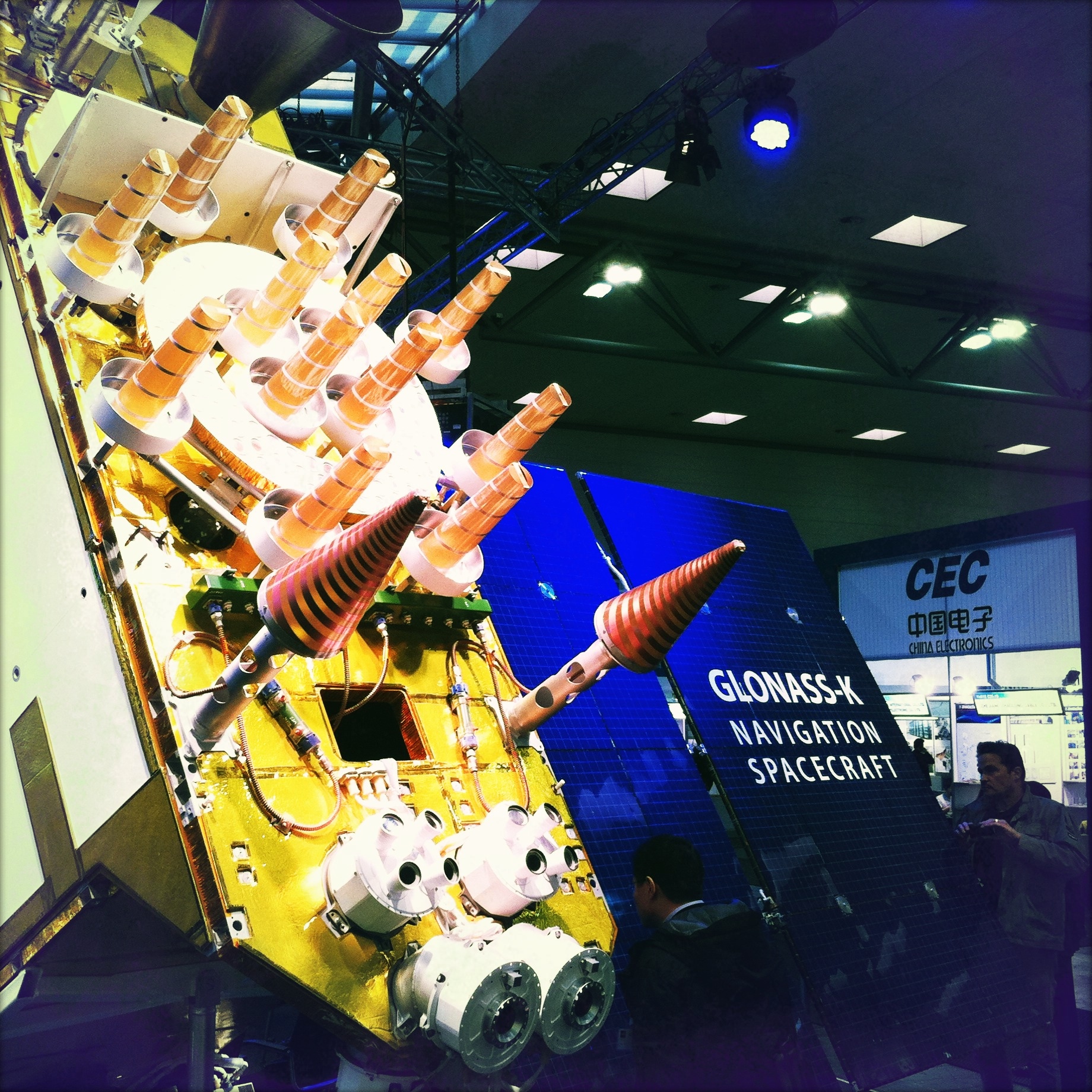
Cosmos 2456 (also rendered as Kosmos 2456) is a Russian military satellite operated by the Russian Space Forces and assigned the NORAD catalog identifier 36111. Launched on December 13, 2009, it forms part of the GLONASS constellation — Russia's satellite-based radionavigation system, which serves as the country's counterpart to the American GPS network. The satellite carries the international designator 2009-070A and, as of the time of writing, remains in orbit.
Mission and Purpose
GLONASS, short for Globalnaya Navigatsionnaya Sputnikovaya Sistema, is a space-based navigation infrastructure developed originally during the Soviet era and maintained and expanded by the Russian Federation in the decades since. The constellation is designed to provide continuous, global positioning and timing data to both military and, in a secondary capacity, civilian users. Navigation satellites of this family broadcast coded radio signals that allow suitably equipped receivers on the ground, at sea, or in the air to determine their location, velocity, and the precise time with high accuracy.
Cosmos 2456 was one of three satellites lofted together in a single launch event in December 2009, alongside Cosmos 2457 and Cosmos 2458. This tripling approach — placing three navigation satellites aboard one rocket — is characteristic of how Russia has historically replenished and expanded the GLONASS constellation, allowing operators to fill or reinforce an entire orbital plane in a single mission. The simultaneous deployment of three spacecraft reflects both the logistical efficiency of the approach and the urgency that has at times surrounded efforts to restore the constellation to full operational coverage after periods of reduced capacity.
The precise mission status of Cosmos 2456 is not publicly recorded in the satellite catalog, and the Russian Space Forces have not made detailed operational data publicly available. Whether the satellite continues to transmit navigation signals, has been placed in reserve, or has been decommissioned in place is not confirmed in open sources. This opacity is common for Russian military space assets, even those whose general purpose is understood.
Orbit and Tracking
Cosmos 2456 occupies a medium Earth orbit — a regime that is particularly well-suited to navigation satellite constellations because it offers a balance between the geographic coverage achievable from higher altitudes and the signal-strength advantages of closer proximity to users on the surface. With an apogee of 19,149 km and a perigee of 19,124 km, the satellite's orbit is very nearly circular, with only a 25-kilometer difference between its highest and lowest points. This near-perfect circularity is a defining characteristic of operational GLONASS satellites, as consistent altitude translates into more predictable signal propagation and simplified timing calculations for receivers.
The orbital inclination of 65.0° is another hallmark of the GLONASS design architecture. Unlike GPS, which uses an inclination of approximately 55°, GLONASS satellites are placed in steeper orbits that provide somewhat better coverage at high northern latitudes — a deliberate design choice reflecting the geographic extent of Russia and the strategic importance of reliable navigation in Arctic and sub-Arctic regions. At 65.0°, Cosmos 2456 passes over a broad swath of Earth's surface on each revolution, including latitudes well into the polar regions.
The orbital period of approximately 675.7 minutes — just over eleven and a quarter hours — is consistent with the GLONASS medium Earth orbit slot. GLONASS is designed so that satellites complete exactly eight orbits in seventeen sidereal days, a resonance that causes ground tracks to repeat on a regular schedule. This relationship simplifies the geometry of the constellation and helps ensure that users in any given location encounter similar satellite geometry from one day to the next.
Because the satellite's orbit is far above the low Earth orbit regime where most debris and atmospheric drag concerns are concentrated, Cosmos 2456 experiences negligible aerodynamic drag at its operating altitude. This contributes to the long-term stability of its orbit, which accounts for why the object remains cataloged as still in orbit years after its launch. NORAD and the 18th Space Control Squadron track the satellite and maintain its catalog entry, enabling analysts and enthusiasts to compute its position at any given time using published two-line element sets.
Design and Operator
Cosmos 2456 was manufactured by JSC Information Satellite Systems Reshetnev, a company based in Zheleznogorsk (formerly Krasnoyarsk-26) in Siberia that has been the primary developer and producer of GLONASS spacecraft for decades. Reshetnev — known in Russian as AO "Informatsionnyye Sputnikovyye Sistemy imeni akademika M.F. Reshetneva," often abbreviated ISS Reshetnev — is one of Russia's most significant satellite manufacturers, with a heritage in navigation, communications, and geodetic spacecraft extending back to the Soviet period. The company has been responsible for the design, assembly, and testing of successive generations of GLONASS hardware.
The precise mass of Cosmos 2456 is not listed in the publicly available satellite catalog, so no figure is given here. GLONASS satellites of the generation deployed around 2009 are part of the GLONASS-M series, a modernized variant that introduced improvements in signal accuracy and operational lifespan compared to earlier generations, though the specific technical classification of Cosmos 2456 is not independently confirmed by this catalog entry.
The Russian Space Forces serve as the operator of record. That organization — part of the broader Russian Aerospace Forces — is responsible for the military space program of the Russian Federation, including the operation and maintenance of the GLONASS constellation. While GLONASS signals are available for civilian use internationally, the program's administration and the satellites themselves remain under military oversight.
Significance and Current Status
The December 2009 launch that carried Cosmos 2456 into orbit was part of a sustained campaign to bring the GLONASS constellation back to full global operational capability. The constellation had suffered from satellite failures and funding shortfalls in the post-Soviet period, and restoring it to full coverage — nominally requiring 24 operational satellites — was a stated priority for the Russian government during the 2000s. The launch of Cosmos 2456, alongside its two sister spacecraft, represented one incremental step in that restoration effort.
From a broader historical perspective, GLONASS represents one of only two satellite navigation systems that achieved full global coverage in the twentieth and early twenty-first centuries alongside GPS. In a context where geopolitical reliance on a single nation's infrastructure has increasingly become a strategic concern, the continued development of GLONASS has been significant for nations and militaries seeking an alternative or supplementary navigation capability. Many modern dual-band receivers around the world are designed to use both systems simultaneously, improving fix accuracy and resilience.
The current operational status of Cosmos 2456 individually is not confirmed in open catalog data. The satellite's continued presence in the catalog indicates it has not undergone a destructive reentry or been officially logged as decayed, but this does not necessarily mean it is transmitting navigation signals. Satellites in this orbit class can persist in cataloged orbits for extremely long periods even after they have ceased active operation, given the negligible atmospheric influence at medium Earth orbit altitudes. Without official disclosure from the Russian Space Forces or updates to its mission status, Cosmos 2456 remains cataloged as a payload of unknown current mission status.
Its NORAD identifier of 36111 and its international COSPAR designation of 2009-070A serve as the authoritative reference codes by which the object can be located in tracking databases, ephemeris archives, and observation planning tools. Researchers, satellite trackers, and analysts who wish to examine the object's predicted trajectory or historical orbital evolution can do so using these identifiers in conjunction with publicly maintained space surveillance data. The near-circular orbit at medium Earth altitude makes the satellite's trajectory highly predictable over extended time horizons, and its inclination ensures it is periodically visible from a wide range of latitudes as it traverses the sky well above the geostationary belt but far below lunar distances.
Altitude history
Apogee and perigee for COSMOS 2456 (730) across 149 days of archived orbital elements (151 element sets, one per day).
Derived from our own archive of CelesTrak orbital elements, sampled every 3 hours. Short windows show drag and station-keeping; they are not a reentry prediction.
Launched with
One other catalogued object still in orbit from launch 2009-070 (Proton-M | Uragan-M 21 to 23).
- COSMOS 2457 (733) · 36112
Sources & further reading
Embed this satellite on your site
Free for editorial use. Attribution back to LowEarth is required.
<iframe src="https://lowearth.app/embed/36111" width="640" height="400" frameborder="0" allow="fullscreen"></iframe>