COSMOS 2436 (723)
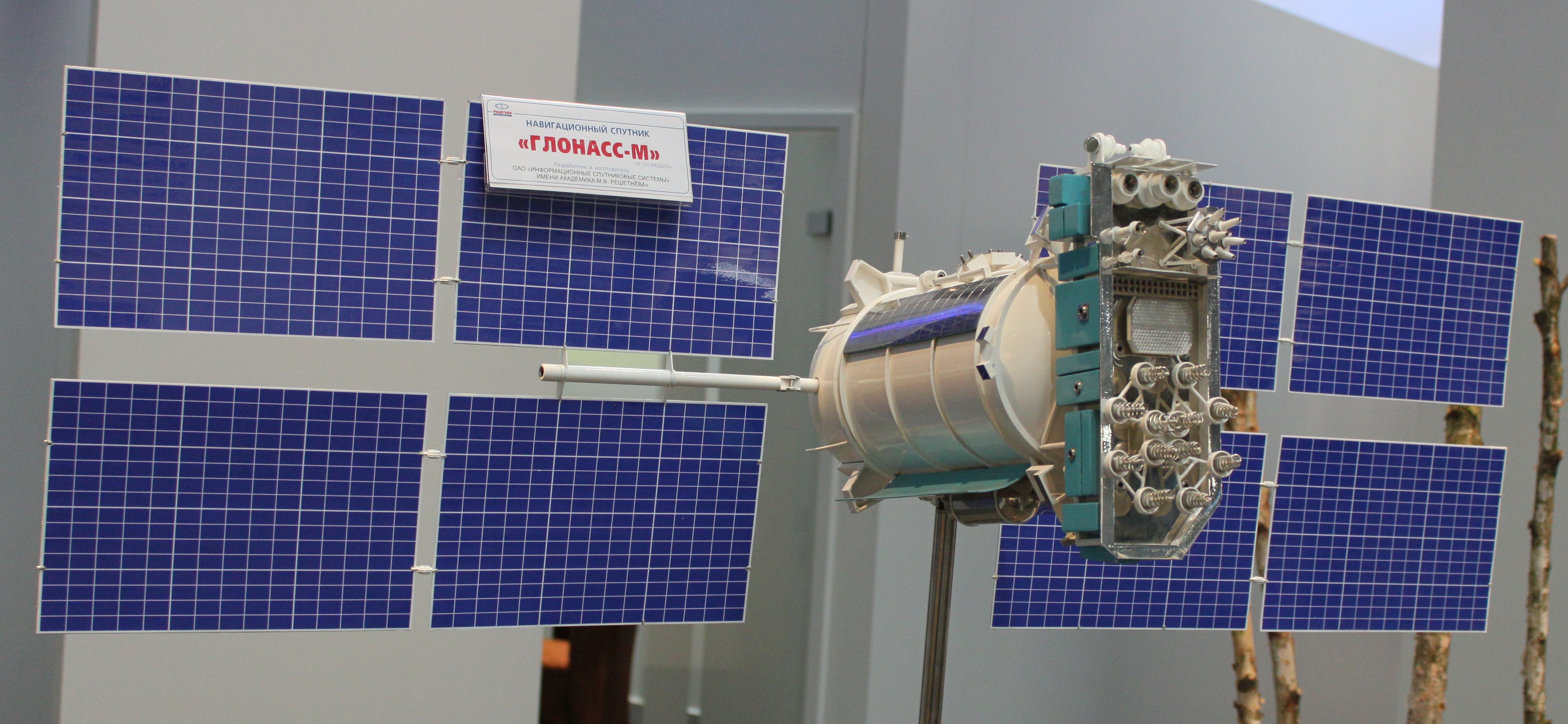
About COSMOS 2436 (723)
Cosmos 2436 (also rendered as Kosmos 2436) is a Russian military satellite launched on December 24, 2007, and operated by the Russian Space Forces. Catalogued by the United States Space Surveillance Network under NORAD ID 32395 and identified internationally by the COSPAR designator 2007-065C, it occupies a medium Earth orbit as part of Russia's GLONASS satellite navigation constellation. The spacecraft was one of three navigation satellites delivered to orbit simultaneously on that date, alongside its companions Kosmos 2434 and Kosmos 2435. As of the time of writing, all three remain in orbit, continuing to contribute to a navigation system that rivals the American GPS network in global scope and strategic importance.
Mission and Purpose
GLONASS — an acronym derived from the Russian *Globalnaya Navigatsionnaya Sputnikovaya Sistema*, meaning Global Navigation Satellite System — is Russia's state-owned counterpart to the United States' Global Positioning System. Developed originally during the Soviet era and later revitalized under the Russian Federation, GLONASS provides positioning, velocity, and timing data to both military and civilian users worldwide. The system is managed and operated by the Russian Space Forces, which treats the constellation as a critical element of national defense infrastructure as well as a platform for civilian and commercial applications.
Cosmos 2436 was launched as part of a coordinated effort in the mid-to-late 2000s to replenish and modernize the GLONASS constellation, which had suffered significant degradation in the years following the dissolution of the Soviet Union. At its post-Soviet nadir, the constellation had fallen to fewer than a dozen operational satellites, well below the minimum needed for reliable global coverage. Russia committed substantial resources to rebuilding the network, and the 2007 triple launch that included Cosmos 2436 was a direct expression of that commitment. Launching three satellites simultaneously on a single Proton rocket — the standard delivery vehicle for GLONASS replenishment missions of that era — was both economically efficient and operationally expedient, allowing the constellation to be reinforced quickly.
The precise mission status of Cosmos 2436 is not publicly recorded in the available catalog data. Whether the satellite is currently transmitting navigation signals in an active operational role, held in reserve as a spare, or no longer functioning is not confirmed in open sources. This ambiguity is not unusual for military satellites, whose operational details are rarely disclosed by their operators. What is clear is that the spacecraft remains physically present in orbit more than seventeen years after its launch.
Orbit and Tracking
Cosmos 2436 occupies a medium Earth orbit, the orbital regime characteristic of all GLONASS navigation satellites. Its current tracked orbital parameters place the apogee at approximately 19,181 kilometers above Earth's surface and the perigee at approximately 19,093 kilometers, indicating a nearly circular orbit — a configuration well-suited to navigation satellite operations, where consistent altitude translates to predictable signal geometry and timing stability. The separation between apogee and perigee amounts to less than 90 kilometers, confirming that the orbit has experienced minimal eccentricity growth over the satellite's lifetime.
The orbital inclination is 64.3 degrees relative to the equatorial plane. This inclination is a deliberate design characteristic of the GLONASS system and distinguishes it from GPS, whose satellites fly at an inclination of approximately 55 degrees. The higher inclination chosen for GLONASS provides improved coverage at high northern latitudes, including Russia's vast Arctic territory — a geographic priority that shaped the constellation's architecture from its earliest design stages. At 64.3 degrees, Cosmos 2436's ground track sweeps regularly over polar and sub-polar regions that GPS coverage alone serves less reliably.
The orbital period of Cosmos 2436 is approximately 675.7 minutes, or roughly eleven hours and sixteen minutes per revolution. This is consistent with the GLONASS design standard, which calls for satellites to complete approximately 17 revolutions every eight sidereal days — a resonance that causes the ground tracks to repeat on a regular schedule, simplifying the mathematical framework needed for users to compute their positions. The repeat-track property is central to the predictability that makes satellite navigation practical.
Tracking of Cosmos 2436 is maintained through the global network of radar and optical sensors that feed data into the United States Space Surveillance Network catalog, where the object is registered under NORAD ID 32395. The satellite's orbital elements are updated regularly and made publicly available, allowing operators, researchers, and hobbyists alike to compute current positions and predict future passes.
Design and Operator
Cosmos 2436 was manufactured by JSC Information Satellite Systems Reshetnev, the Siberian-based aerospace company headquartered in Zheleznogorsk (Krasnoyarsk Krai) that has long served as Russia's primary developer and manufacturer of navigation and communications satellites. Reshetnev — formerly known as NPO Prikladnoi Mekhaniki, or NPO PM — has been responsible for the design and construction of GLONASS spacecraft throughout the constellation's history, from the earliest generation of satellites to the more capable modern variants. The company's deep institutional knowledge of the GLONASS platform makes it effectively indispensable to the program.
The specific mass of Cosmos 2436 is not recorded in the publicly available catalog data. GLONASS satellites of the generation active around 2007 were generally classified as GLONASS-M spacecraft, an improved second-generation variant that offered enhanced signal quality, longer design lifetimes, and compatibility with international interoperability standards compared to earlier GLONASS models — but as these details are not confirmed in the verified record for this specific object, they are noted here only as general programmatic context rather than stated facts about this satellite in particular.
Operational authority over Cosmos 2436 rests with the Russian Space Forces, the branch of the Russian military responsible for military space activities including the launch, control, and management of the country's strategic satellite systems. The Russian Space Forces coordinates with civilian agencies and commercial interests in the management of GLONASS but retains ultimate authority over the constellation's military assets.
Significance and Current Status
The triple launch of December 24, 2007 — which placed Cosmos 2434, Cosmos 2435, and Cosmos 2436 into orbit in a single mission — occurred during a pivotal period in GLONASS's recovery. By the end of 2007, Russian officials were publicly announcing that the constellation had reached the threshold needed to provide continuous, uninterrupted coverage of Russian territory, a milestone that had eluded the program for years. The addition of these three satellites contributed directly to that achievement.
On a broader strategic level, the continued operation of GLONASS as a full global constellation represents a significant assertion of Russian technological and geopolitical independence. The availability of a Russian-operated navigation system means that Russian military forces, as well as civilian and commercial users who choose to adopt it, are not dependent on access to GPS, which is owned and operated by the United States government. Many modern receivers are designed to use signals from both GPS and GLONASS simultaneously, improving accuracy and reliability — an interoperability that reflects the recognized global utility of the Russian system alongside its American counterpart.
Cosmos 2436 itself has now spent more than seventeen years in orbit. Whether it remains a contributing element of the active GLONASS constellation or has been retired from service is not confirmed in publicly available records. Satellites in medium Earth orbit are not subject to rapid atmospheric decay in the way that low Earth orbit objects are, and without active deorbit maneuvers, they can remain in their operational altitude bands for very long periods. The satellite's orbit shows no indication of imminent reentry, and no decay date is recorded in the current catalog entry.
The longevity of Cosmos 2436 in orbit is itself a minor note in the growing conversation about long-duration space object management. As the medium Earth orbit environment becomes increasingly populated with navigation satellite infrastructure from multiple nations — GPS, GLONASS, Europe's Galileo, and China's BeiDou — the question of what happens to aging satellites at the end of their functional lives becomes more pressing. Cosmos 2436, still circling the Earth at an altitude above 19,000 kilometers, is one of many aging navigation satellites whose eventual disposition remains unresolved.
For researchers, satellite trackers, and anyone with an interest in the architecture of global navigation systems, Cosmos 2436 represents a tangible artifact of a consequential moment in the rebuilding of Russian space capability — a single spacecraft within a larger strategic investment that reshaped Russia's position in the global navigation landscape over the course of a decade.
Altitude history
Apogee and perigee for COSMOS 2436 (723) across 149 days of archived orbital elements (151 element sets, one per day).
Derived from our own archive of CelesTrak orbital elements, sampled every 3 hours. Short windows show drag and station-keeping; they are not a reentry prediction.
Launched with
One other catalogued object still in orbit from launch 2007-065 (Proton-M | Uragan-M 12 to 14).
- COSMOS 2434 (721) · 32393
Sources & further reading
Embed this satellite on your site
Free for editorial use. Attribution back to LowEarth is required.
<iframe src="https://lowearth.app/embed/32395" width="640" height="400" frameborder="0" allow="fullscreen"></iframe>