COSMOS 2434 (721)
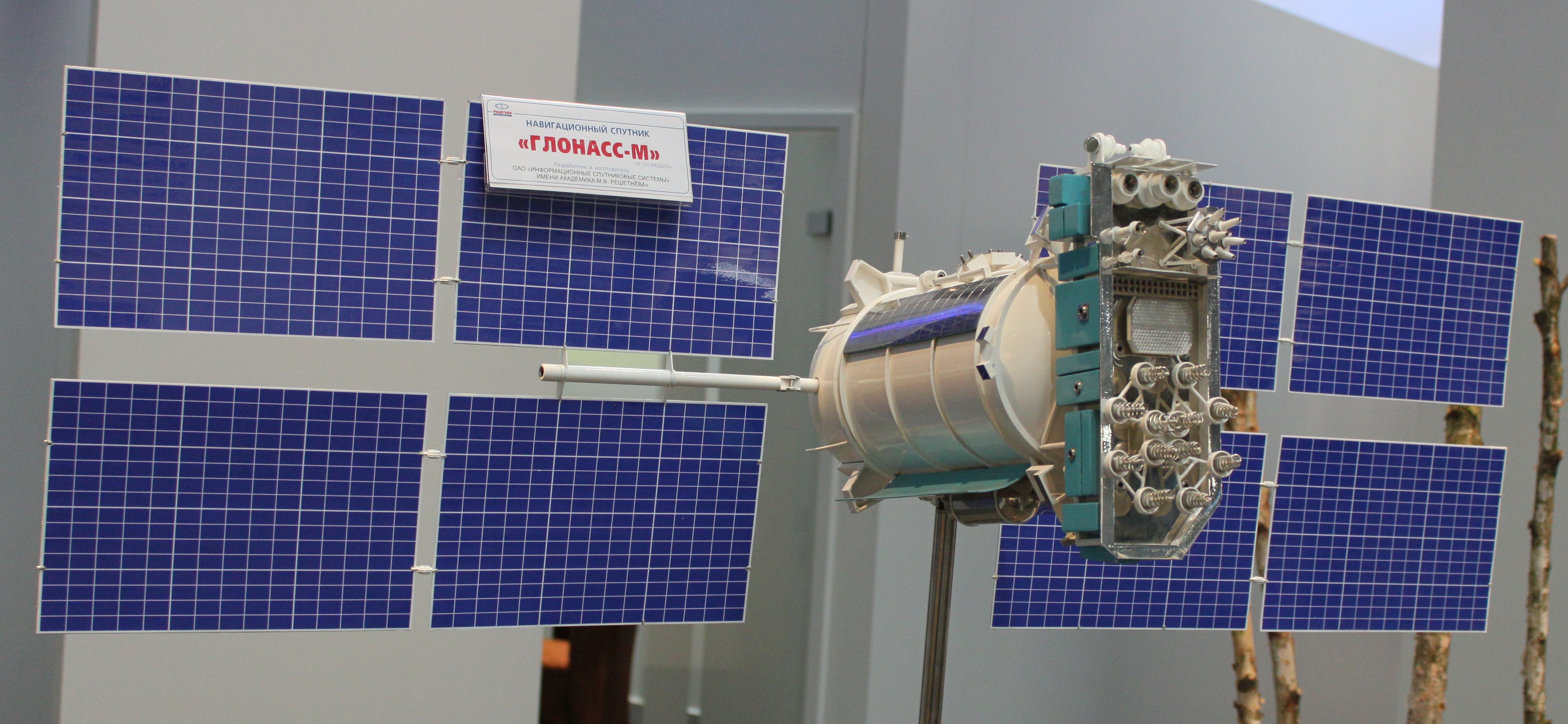
About COSMOS 2434 (721)
COSMOS 2434 (also catalogued under the Russian military designation Kosmos 2434) is a Russian satellite operating in medium Earth orbit as part of the GLONASS global navigation satellite system. Assigned NORAD catalog number 32393 and international designator 2007-065A, the spacecraft was launched on December 24, 2007, and remains in orbit today. It was one of three GLONASS satellites dispatched together in a single launch, alongside Kosmos 2435 and Kosmos 2436, continuing a long-established Russian practice of deploying navigation satellites in triplets to rapidly maintain and expand the constellation's coverage capabilities.
Mission and Purpose
COSMOS 2434 was launched in support of the GLONASS program — the Russian Federation's satellite-based radionavigation system, which functions as the Russian counterpart to the American GPS, the European Galileo, and the Chinese BeiDou systems. GLONASS, an abbreviation of *Globalnaya Navigatsionnaya Sputnikovaya Sistema* (Global Navigation Satellite System), was originally developed during the Soviet era and has been sustained and modernized by the Russian state since the dissolution of the USSR. The constellation is operated under the authority of the Russian Space Forces and provides positioning, velocity, and timing data to both military and civilian users worldwide.
The specific mission profile assigned to COSMOS 2434 is not publicly recorded in standard satellite catalogs, and the Russian Space Forces have not disclosed detailed operational parameters for individual GLONASS spacecraft beyond what is derivable from orbital mechanics and the broader program context. This is characteristic of the Kosmos naming convention more broadly: Russian military satellites — regardless of whether they serve communications, navigation, reconnaissance, or other functions — are routinely given the generic "Kosmos" designation, which deliberately obscures the precise nature of individual payloads.
What is well established from the program context is that GLONASS relies on satellites distributed across three orbital planes, with each plane nominally containing eight spacecraft. Launches conducted in triplets are designed to replenish or expand a given orbital plane efficiently in a single mission. The December 2007 launch that carried COSMOS 2434, along with its two companions, represented one such replenishment event, adding three spacecraft to the constellation in a single Proton rocket mission — a workhorse launch vehicle historically favored for GLONASS deployments.
Orbit and Tracking
COSMOS 2434 occupies a medium Earth orbit with an apogee of 19,139 km and a perigee of 19,134 km, making its orbit very nearly circular — a defining characteristic of navigation satellites, for which orbital stability and consistent ground coverage are essential. The extremely close match between apogee and perigee (a difference of only 5 km) confirms that the spacecraft is operating in a well-maintained, nearly perfectly circular orbit.
The satellite's orbital inclination is 64.3°, which is the standard inclination for the GLONASS constellation and distinguishes it from GPS satellites, which are inclined at approximately 55°. This steeper inclination is a deliberate design choice that provides improved coverage at high latitudes, including the Russian Arctic — a strategically and economically significant region for Russia that GPS, optimized more for mid-latitude coverage, serves less effectively. As a result, GLONASS has historically offered better positional accuracy in polar and sub-polar regions than its American counterpart.
With an orbital period of 675.7 minutes — approximately 11 hours and 16 minutes — COSMOS 2434 completes just under two and a quarter orbits per day. GLONASS satellites are specifically designed so that they complete exactly eight orbits in the same time that Earth completes seventeen rotations, ensuring a repeating ground track pattern roughly every eight sidereal days. This resonance helps operators plan consistent coverage and simplifies the constellation management process.
The spacecraft is registered in the catalog as object type PAYLOAD, meaning it is the primary satellite itself rather than associated rocket bodies or debris fragments. Its current orbital parameters place it well within the altitude band used by all major navigation satellite constellations, typically between roughly 19,000 and 24,000 km above Earth's surface.
Design and Operator
COSMOS 2434 was manufactured by JSC Information Satellite Systems Reshetnev, headquartered in Zheleznogorsk (formerly Krasnoyarsk-26), in the Krasnoyarsk Krai region of Russia. Reshetnev — formally known by its Russian acronym ISS Reshetnev — is the primary industrial contractor for Russian navigation, communications, and geodetic satellites, and has been the core manufacturer for the GLONASS constellation across multiple generations of hardware. The company traces its origins to the Soviet space program and has been responsible for the design and production of the majority of Russian civil and military satellites in medium and geostationary orbits.
The spacecraft falls within the GLONASS-M generation of satellites, which introduced a number of improvements over the original GLONASS design, including dual-frequency civilian signal transmission, improved signal accuracy, and extended operational lifetimes. GLONASS-M satellites represented a significant modernization of the constellation during the mid-2000s, a period when Russia was investing heavily in restoring full global coverage after the constellation had degraded significantly during the economically difficult 1990s.
The mass of COSMOS 2434 is not available in the public catalog record. The operator is identified as the Russian Space Forces, the branch of the Russian military responsible for the nation's space assets, including the operation and maintenance of the GLONASS constellation. The Russian Space Forces coordinates with civil agencies such as Roscosmos on matters relating to civilian GLONASS applications, but maintains primary authority over the military navigation infrastructure the satellite supports.
Current Status and Significance
As of the present date, COSMOS 2434 remains in orbit and has not undergone reentry or deorbit. No decay date has been recorded, and the satellite continues to be tracked. Whether it remains operationally active as a navigation transmitter, has been placed in reserve, or has exceeded its design service life and is now simply a tracked object in medium Earth orbit is not confirmed in publicly available catalog data — a situation common for aging military satellites that may be decommissioned without formal public announcement.
The satellite's launch in late 2007 came during a pivotal period for the GLONASS program. At the start of the decade, the constellation had fallen to fewer than ten operational satellites — far below the twenty-four needed for continuous global coverage — due to chronic underfunding and satellite failures in the 1990s. A sustained recapitalization effort beginning in the early 2000s, backed by significant Russian government investment, brought the constellation back toward full operational capability through a series of triplet launches conducted throughout the mid-to-late 2000s. The December 2007 mission that deployed COSMOS 2434, Kosmos 2435, and Kosmos 2436 was one of several such launches that collectively restored and then maintained global GLONASS coverage.
The broader significance of COSMOS 2434 lies therefore in its role as one component of this restoration effort. Individual navigation satellites rarely attract attention on their own merits — their value is fundamentally collective, derived from the geometry and redundancy of the constellation as a whole rather than from any single spacecraft's capabilities. For that reason, COSMOS 2434 is best understood as a functional brick in a larger architecture, one whose operational contribution was meaningful precisely because it arrived alongside peers filling adjacent orbital slots.
GLONASS today is embedded in billions of devices globally, as most modern smartphones and navigation receivers use multi-constellation positioning — drawing simultaneously on GPS, GLONASS, Galileo, and BeiDou — to achieve faster signal acquisition and greater positional accuracy than any single system could provide alone. The satellites of the 2007 generation played a direct role in building the reliable, globally available GLONASS signal that made this multi-constellation integration commercially and technically practical.
Observability and Tracking
COSMOS 2434 orbits at an altitude of approximately 19,100 km, placing it far beyond the low Earth orbital shell where satellites are routinely visible to the naked eye. At medium Earth orbit altitudes, satellites are too distant and too faint under most circumstances to be observed without optical aid, and they move across the sky far more slowly than low Earth orbit objects due to their much longer orbital periods. For most ground-based observers, COSMOS 2434 is not a practical naked-eye observing target.
However, the satellite is actively tracked by ground-based radar and optical surveillance networks, and its orbital elements are maintained in the public catalog, making it accessible for study through satellite-tracking software and services. Observers with suitable telescopic equipment and accurate ephemeris data can, in principle, detect medium Earth orbit satellites, though this remains a specialized pursuit. Real-time tracking data for COSMOS 2434 is available through this catalog using its NORAD identifier 32393.
Altitude history
Apogee and perigee for COSMOS 2434 (721) across 148 days of archived orbital elements (150 element sets, one per day).
Derived from our own archive of CelesTrak orbital elements, sampled every 3 hours. Short windows show drag and station-keeping; they are not a reentry prediction.
Launched with
One other catalogued object still in orbit from launch 2007-065 (Proton-M | Uragan-M 12 to 14).
- COSMOS 2436 (723) · 32395
Sources & further reading
Embed this satellite on your site
Free for editorial use. Attribution back to LowEarth is required.
<iframe src="https://lowearth.app/embed/32393" width="640" height="400" frameborder="0" allow="fullscreen"></iframe>