COSMOS 2432 (719)
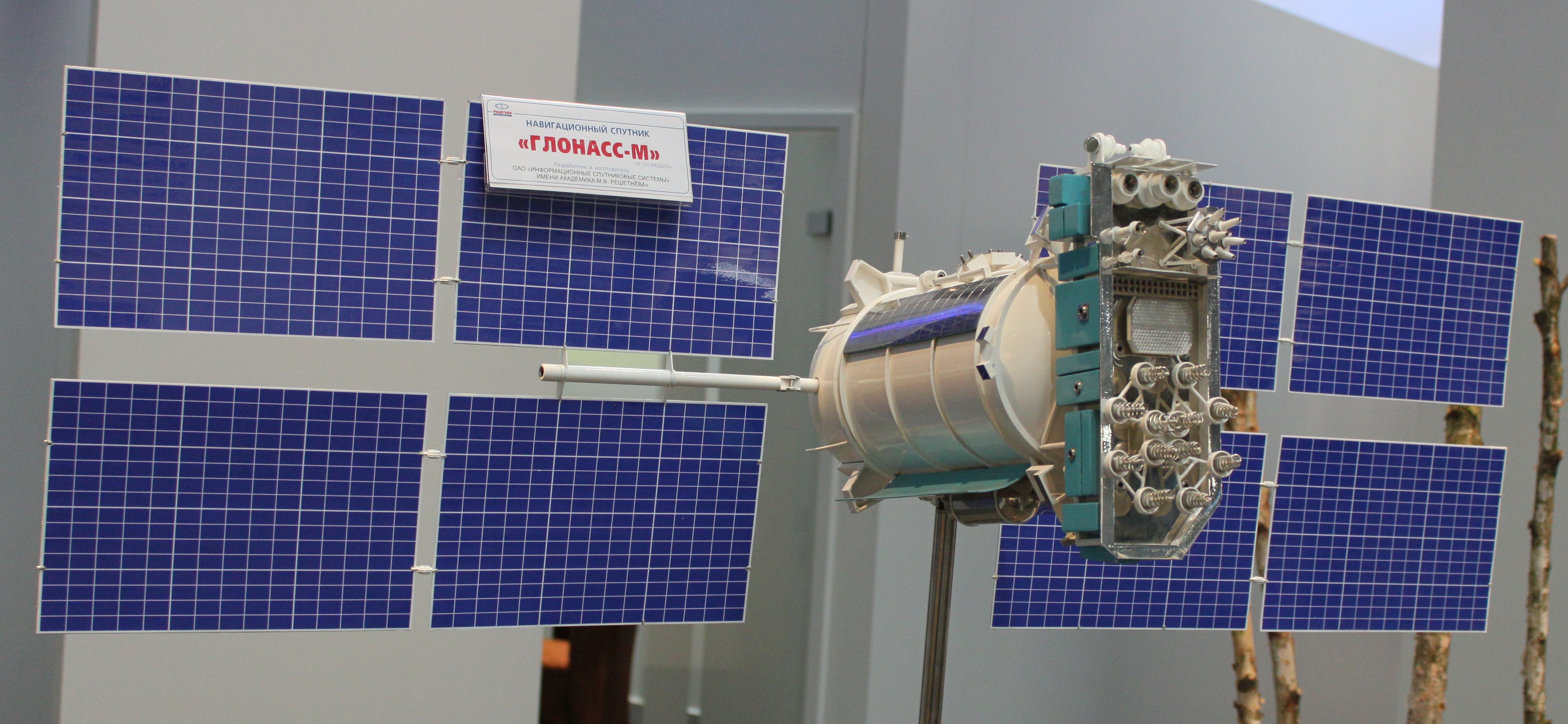
About COSMOS 2432 (719)
Cosmos 2432 (also rendered as Kosmos 2432, and catalogued under NORAD ID 32276) is a Russian military satellite operating as part of the GLONASS global navigation satellite system. Launched in October 2007 alongside two companion spacecraft, it occupies a medium Earth orbit and continues to be tracked by space surveillance networks. Assigned the international designator 2007-052B, it represents one piece of Russia's sustained effort to maintain and expand its sovereign satellite navigation infrastructure during the mid-2000s.
Mission and Purpose
GLONASS — an acronym for Globalnya Navigatsionnaya Sputnikovaya Sistema, or Global Navigation Satellite System — is Russia's counterpart to the American GPS network. Developed initially during the Soviet era and subsequently inherited and expanded by the Russian Federation, the system provides positioning, navigation, and timing services for both military and civilian users worldwide. Like GPS, GLONASS depends on a constellation of satellites distributed across multiple orbital planes to ensure continuous global coverage; a sufficient number of healthy satellites must be simultaneously visible from any point on Earth for the system to function reliably.
Cosmos 2432 was launched as one of three satellites dispatched together in a single mission in late 2007, alongside Cosmos 2431 and Cosmos 2433. Batch launches of this kind are a characteristic feature of GLONASS replenishment campaigns: deploying three satellites at once allows operators to populate or refresh an entire orbital plane in a single launch event, which is far more efficient than sending satellites up individually. The mid-2000s were a particularly active period for GLONASS restoration. Following severe underfunding after the Soviet collapse — which caused the constellation to degrade significantly through the 1990s — the Russian government committed substantial resources to rebuilding the network, and a series of triple launches helped bring the system back toward full operational capability.
The specific mission parameters of Cosmos 2432, including any classified operational role beyond general navigation service, are not recorded in the public catalog. The Russian Space Forces, which operate the satellite, designate it under the generic Cosmos naming convention routinely applied to military spacecraft of varied purposes. What is publicly known is its classification as a payload in the GLONASS program, consistent with its orbital characteristics.
Orbit and Tracking
Cosmos 2432 occupies a medium Earth orbit highly consistent with standard GLONASS operational parameters. Its current tracked apogee stands at approximately 19,157 km above Earth, and its perigee is recorded at roughly 19,116 km — a difference of only about 41 km, making the orbit very nearly circular. This near-perfect circularity is functionally important for a navigation satellite: a consistent altitude ensures that the signal propagation delay from the satellite to a ground-based receiver remains stable and predictable, which in turn supports the precise timing calculations that underpin accurate positioning.
The orbit is inclined at 65.6 degrees relative to the equatorial plane. This inclination is a defining characteristic of the GLONASS constellation and distinguishes it from GPS, whose satellites fly at an inclination of roughly 55 degrees. The higher inclination used by GLONASS provides better coverage at high latitudes, including across Russia itself, which stretches deep into the Arctic. For users in northern regions — whether military units, civilian navigators, or scientific researchers — this geometric advantage translates into more satellite overhead at any given moment.
Cosmos 2432 completes one orbit of Earth in approximately 675.7 minutes, or roughly 11 hours and 16 minutes. This is close to exactly eight-ninths of a sidereal day, a resonance deliberately exploited in GLONASS constellation design to ensure that ground tracks repeat in a predictable pattern, simplifying constellation management.
As of the time of this writing, Cosmos 2432 remains in orbit and has not undergone a controlled deorbit or suffered an uncontrolled reentry. It continues to be tracked by the 18th Space Control Squadron and other elements of the global space surveillance network, and its orbital elements are regularly updated in public catalogs including the one maintained by Space-Track.org.
Design and Operator
Cosmos 2432 was manufactured by JSC Information Satellite Systems Reshetnev, headquartered in Zheleznogorsk (formerly Krasnoyarsk-26), Siberia. Reshetnev — also commonly abbreviated ISS Reshetnev — is the primary industrial contractor responsible for building GLONASS satellites and has been central to the program since its origins. The company has produced successive generations of GLONASS hardware, progressively improving signal accuracy, satellite longevity, and additional capabilities with each new block.
Cosmos 2432 belongs to the GLONASS-M series, the second-generation variant of the constellation that began replacing older GLONASS satellites in the early 2000s. GLONASS-M satellites offered substantial improvements over their predecessors, including extended design lifetimes and enhanced signal quality. While the public catalog does not record the mass of this particular satellite, GLONASS-M spacecraft are generally understood to be in the range of roughly 1,400 kilograms at launch — a figure drawn from published technical literature on the program rather than from this satellite's individual entry.
The satellite is operated by the Russian Space Forces, the branch of Russia's armed forces responsible for military space operations, including the management of the GLONASS constellation. Control is exercised through a network of ground stations distributed across Russian territory, coordinating telemetry, tracking, and command functions. The civil applications of GLONASS are overseen by Roscosmos and other agencies, but the satellites themselves remain military assets under Space Forces authority.
Significance and Current Status
The launch of Cosmos 2431, 2432, and 2433 together in October 2007 was part of a critical phase in GLONASS recovery. By the close of that year, the constellation had grown to a level capable of providing reliable regional and near-global navigation coverage, and within a few years Russia was able to declare the restored system fully operational worldwide. The triple launches of the mid-to-late 2000s were essential to achieving this milestone, and Cosmos 2432 was among the satellites that made that progress possible.
For Russia, a fully functioning GLONASS constellation carries both strategic and sovereign significance. Strategically, it provides the military with navigation and targeting capabilities independent of any foreign-controlled infrastructure — a dependency that Russian planners had long identified as a vulnerability. Sovereignly, it represents a statement of technological capability and self-sufficiency at a time when satellite navigation was becoming indispensable across virtually every domain of modern activity. Requiring Russian military and critical civilian users to depend on the American GPS network was seen as an unacceptable long-term posture, and the reinvestment in GLONASS reflected a national decision to correct that situation.
Cosmos 2432 itself has now been in orbit for well over fifteen years. GLONASS-M satellites were designed with operational lifetimes on the order of seven years, meaning this satellite has considerably exceeded its original design expectations if it remains active — or, alternatively, it may have been retired from active navigation service while still physically present in orbit as a tracked but inactive object. The public catalog does not record its current operational status, and Russian authorities do not routinely disclose which individual GLONASS satellites remain in active service versus those retained on orbit in a reserve or non-operational state.
Regardless of its current functional status, Cosmos 2432 contributes to the historical record of GLONASS reconstitution and stands as an example of the programmatic commitment Russia made in the 2000s to rebuild its navigation infrastructure. The satellite's orbital slot, its inclination, and its role in a batch launch all reflect deliberate engineering and policy choices that shaped the modern GLONASS constellation still in use today. Successive generations of GLONASS satellites — including the more capable GLONASS-K series — have since been launched to supplement and eventually replace the GLONASS-M cohort, but the rebuilding era represented by spacecraft like Cosmos 2432 remains foundational to the system's contemporary form.
The orbital elements for Cosmos 2432 are publicly available through space tracking services, and the satellite will continue to be monitored as part of routine cataloguing of objects in medium Earth orbit. Its near-circular, high-inclination orbit ensures that it poses no immediate reentry risk and that its position remains predictable well into the future based on standard propagation models.
Altitude history
Apogee and perigee for COSMOS 2432 (719) across 113 days of archived orbital elements (115 element sets, one per day).
Derived from our own archive of CelesTrak orbital elements, sampled every 3 hours. Short windows show drag and station-keeping; they are not a reentry prediction.
Launched with
One other catalogued object still in orbit from launch 2007-052 (Proton | Uragan-M 9 to 11).
- COSMOS 2433 (720) · 32275
Sources & further reading
Embed this satellite on your site
Free for editorial use. Attribution back to LowEarth is required.
<iframe src="https://lowearth.app/embed/32276" width="640" height="400" frameborder="0" allow="fullscreen"></iframe>