COSMOS 2433 (720)
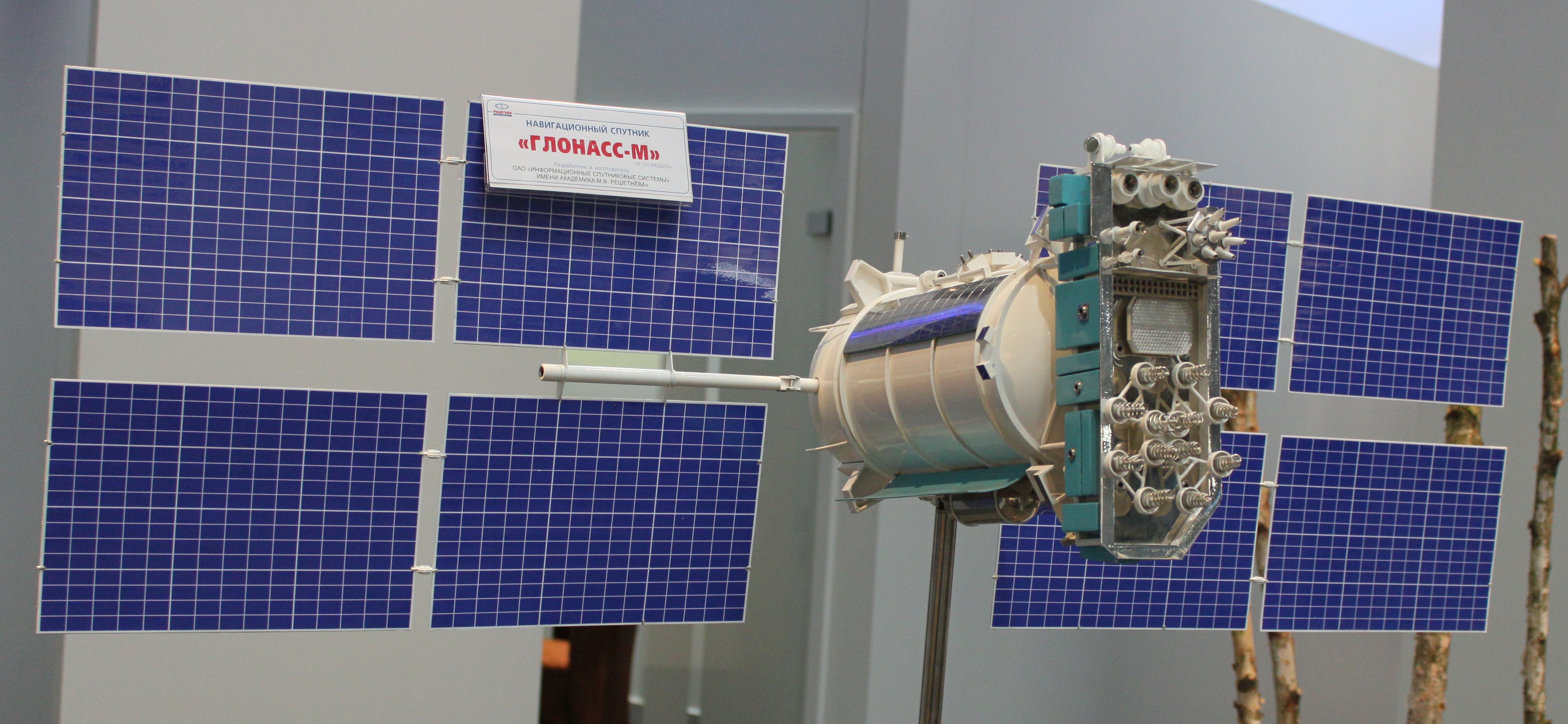
About COSMOS 2433 (720)
Cosmos 2433 is a Russian military satellite launched in October 2007 as a component of the GLONASS global navigation satellite system. Operated by the Russian Space Forces and catalogued by NORAD under identifier 32275, it carries the international designator 2007-052A. The spacecraft was one of three GLONASS satellites lofted together in a single mission, joining Cosmos 2431 and Cosmos 2432 as part of a coordinated effort to maintain and expand Russia's satellite navigation constellation. As of the time of writing, Cosmos 2433 remains in orbit, continuing to occupy its designated slot in medium Earth orbit.
Mission and Purpose
Cosmos 2433 was placed into service as part of the GLONASS program, Russia's counterpart to the American GPS network and one of only a handful of global navigation satellite systems ever brought to operational status. GLONASS — an acronym for Globalnaya Navigatsionnaya Sputnikovaya Sistema — was originally developed during the Soviet era and provides positioning, velocity, and timing data to both military and civilian users worldwide. The Russian Space Forces serve as the institutional operator responsible for the constellation's management and continuity.
The simultaneous launch of three navigation satellites aboard a single rocket is a characteristic feature of GLONASS constellation management. Because the system is designed to function with a full complement of spacecraft distributed across multiple orbital planes, deploying satellites in triads allows operators to efficiently populate or replenish the constellation with minimal launch cadence. Cosmos 2431, 2432, and 2433 were all inserted into orbit together on the same mission in late October 2007, reinforcing one of the system's orbital planes and contributing to the recovery of full global coverage that Russia was pursuing at the time.
The specific mission type for Cosmos 2433 is not recorded in the public satellite catalog, and its current operational status — whether it remains active, has been placed in reserve, or has been decommissioned — is likewise not publicly confirmed. GLONASS satellites have finite operational lifespans, and aging spacecraft within the constellation are periodically retired and replaced by newer generations, though they may remain physically present in orbit for extended periods after their navigation payloads are no longer in use.
Orbit and Tracking
Cosmos 2433 occupies a medium Earth orbit highly characteristic of navigation satellite constellations. Its apogee stands at approximately 19,142 kilometers and its perigee at approximately 19,131 kilometers above Earth's surface, yielding a nearly circular orbit with very little eccentricity. This near-perfect circularity is a deliberate design feature: navigation satellites require highly stable, predictable ground tracks and consistent signal geometry to deliver reliable positioning data to receivers on the ground.
The satellite's orbital inclination of 65.6 degrees is another defining characteristic of the GLONASS system and distinguishes it from GPS. While GPS satellites operate at an inclination of approximately 55 degrees, GLONASS satellites are inclined more steeply, a design choice that provides better coverage at high latitudes, including the Arctic regions that are of particular strategic and operational importance to Russia. At 65.6 degrees, Cosmos 2433 traces a ground track that reaches well into polar regions, ensuring that users at northern latitudes — who might receive degraded service from lower-inclination constellations — can obtain reliable navigation fixes.
The orbital period of Cosmos 2433 is approximately 675.7 minutes, or just over eleven hours and fifteen minutes per revolution. This is consistent with the GLONASS design standard, in which satellites complete exactly eight orbits over the course of seventeen sidereal days. This resonance ensures that the constellation's ground tracks repeat in a regular pattern, which simplifies the geometry of satellite availability for ground receivers and supports the design of the overall navigation architecture.
At the altitude band occupied by Cosmos 2433, spacecraft are well above the densely populated low Earth orbit region but below the geostationary belt. Medium Earth orbit presents a relatively benign environment in terms of atmospheric drag — essentially nonexistent at these altitudes — though spacecraft in this region can be exposed to elevated radiation levels from the Van Allen belts, a factor that satellite designers must account for in shielding and electronics hardening.
Design and Operator
Cosmos 2433 was manufactured by JSC Information Satellite Systems Reshetnev, based in Zheleznogorsk, Russia (formerly known as NPO Prikladnoi Mekhaniki). Reshetnev has been the primary developer and manufacturer of GLONASS satellites since the program's inception, making it one of the most experienced navigation satellite builders in the world. The company has produced successive generations of GLONASS spacecraft, each iteration bringing improved signal accuracy, extended operational lifetimes, and expanded capabilities relative to its predecessors.
The mass of Cosmos 2433 is not recorded in the publicly available satellite catalog, and no verified figure has been confirmed for this specific spacecraft. In general terms, GLONASS satellites of the era in which Cosmos 2433 was built were substantial platforms, reflecting the complexity of carrying navigation payloads, atomic frequency standards, and the power systems needed to sustain operations in medium Earth orbit over multi-year service lives.
The Russian Space Forces, which serve as the operating authority for the GLONASS constellation, are responsible for commanding the satellite, monitoring its health and status, and integrating its signals — where applicable — into the broader navigation service provided to users. The Space Forces maintain a network of ground stations across Russian territory that support the upload of navigation messages and the monitoring of satellite performance.
Current Status and Significance
When Cosmos 2433 was launched in October 2007, Russia was in the midst of a sustained campaign to restore the GLONASS constellation to full operational capability. The network had suffered significant degradation during the economic difficulties of the 1990s, when funding shortfalls led to satellite failures going unreplaced and the effective coverage of the system dropping below global. The mid-2000s saw renewed political and financial commitment to the program, with an accelerated launch cadence that brought the constellation back toward the twenty-four satellite complement required for continuous worldwide coverage.
The October 2007 triple launch that included Cosmos 2433 was part of this broader reconstitution effort. By adding three spacecraft simultaneously, Russia was able to make substantial progress toward filling out the constellation in a cost-effective manner. Full global coverage was ultimately restored in the years that followed, and subsequent generations of GLONASS spacecraft — including the GLONASS-M and GLONASS-K series — have since been introduced to modernize the system.
Cosmos 2433 holds NORAD catalog number 32275 and continues to be tracked as an orbiting object. Whether the satellite remains operationally active or has transitioned to inactive status is not confirmed in the public record. Given the orbital altitude involved — above 19,000 kilometers — even a decommissioned spacecraft will remain in orbit for an extraordinarily long period without atmospheric drag to cause reentry. Unlike objects in low Earth orbit, which can naturally decay and reenter within years or decades, medium Earth orbit satellites face essentially indefinite residence in space absent active deorbit maneuvers. This makes long-term space sustainability considerations increasingly relevant for aging navigation satellites like Cosmos 2433, and the question of how to responsibly manage end-of-life spacecraft in the medium Earth orbit regime is a subject of growing discussion in the international spaceflight community.
As a member of the 2007-052 launch group — sharing the mission with Cosmos 2431 and Cosmos 2432 — Cosmos 2433 represents a specific chapter in the modern history of the GLONASS program, marking a period of institutional resurgence and technological reinvestment that would ultimately reestablish Russia as the operator of one of the world's two fully global navigation satellite systems.
How to Spot It
Cosmos 2433 orbits at an altitude of over 19,000 kilometers, placing it far beyond the range at which satellites are typically visible to the naked eye under ordinary conditions. Most satellites that amateur observers successfully track are in low Earth orbit, where they are close enough to appear as moving points of light reflecting sunlight. At medium Earth orbit altitudes, the same spacecraft would appear far dimmer due to the greatly increased distance from the observer, and the apparent motion across the sky would be considerably slower.
Cosmos 2433 is not generally regarded as a naked-eye target, and casual sky-watchers are unlikely to observe it without specialized optical equipment. For those using telescopes or tracking software to follow navigation satellites, the orbital elements associated with NORAD catalog number 32275 — including the inclination of 65.6 degrees and the roughly 675.7-minute orbital period — can be used to predict its position and passage for any given location on Earth. Observers at higher latitudes, particularly in northern Europe, Russia, and Canada, will have somewhat better opportunities to observe the satellite's track given its steep inclination.
Altitude history
Apogee and perigee for COSMOS 2433 (720) across 149 days of archived orbital elements (151 element sets, one per day).
Derived from our own archive of CelesTrak orbital elements, sampled every 3 hours. Short windows show drag and station-keeping; they are not a reentry prediction.
Launched with
One other catalogued object still in orbit from launch 2007-052 (Proton | Uragan-M 9 to 11).
- COSMOS 2432 (719) · 32276
Sources & further reading
Embed this satellite on your site
Free for editorial use. Attribution back to LowEarth is required.
<iframe src="https://lowearth.app/embed/32275" width="640" height="400" frameborder="0" allow="fullscreen"></iframe>