★ Historic mission

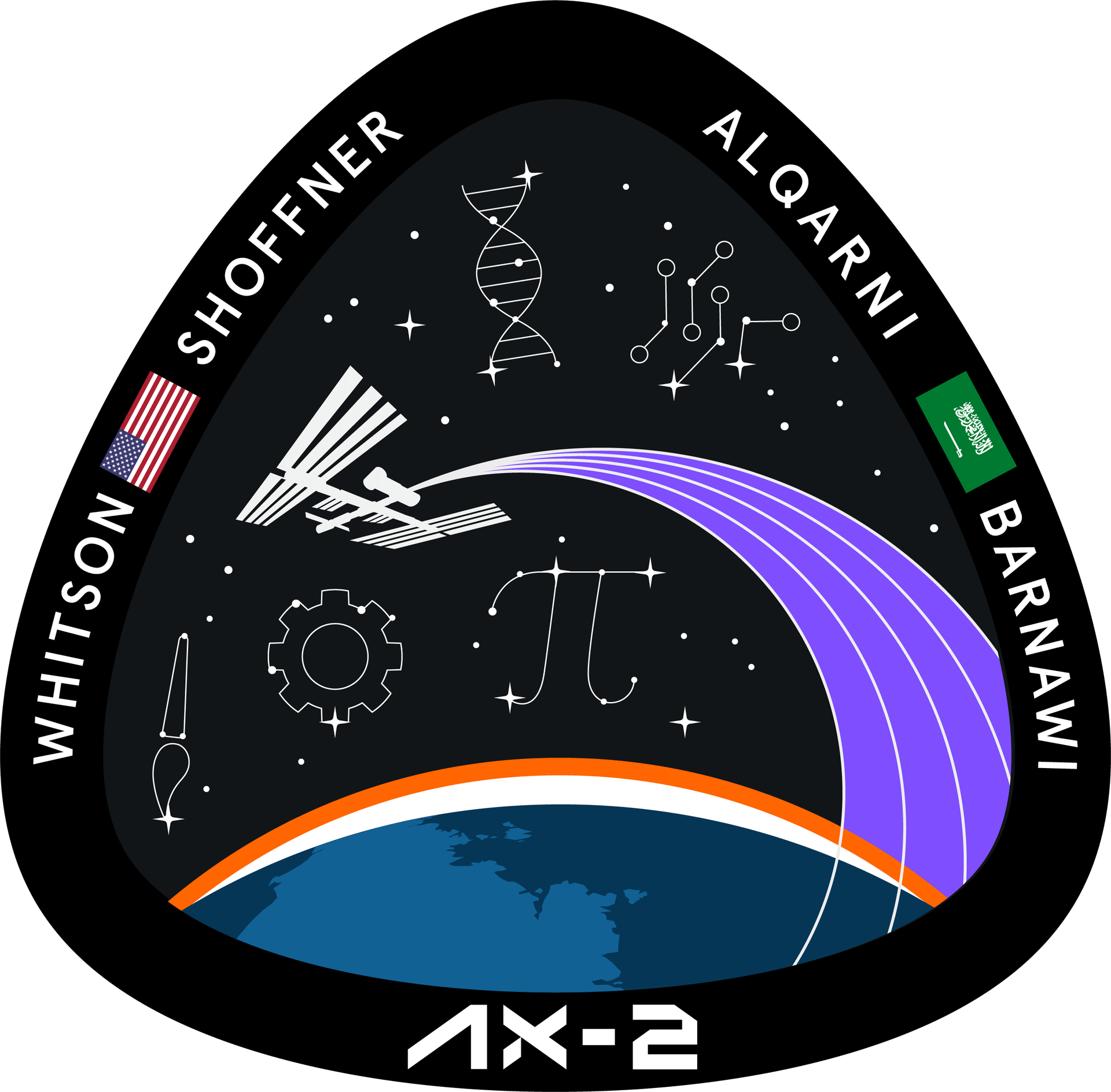
Falcon 9 Block 5 | Axiom Space Mission 2

Alan Shepard — first American in space (Mercury-Redstone 3).

Falcon 9· Launch Complex 39A· Success
Trajectory & orbital insertion
Ascent path is a representation — true ascent telemetry isn’t public.
Provider
SpaceX
Provider type
Commercial
Orbit
LEO
Mission type
Human Exploration
Launch site
United States of America
Date
Sun, 21 May 2023 21:37:09 GMT
Orbital launch #
#6443 ever
Go probability
60%

About this launch

Background

The flight known as Axiom Space Mission 2, or Ax-2, represents one of the clearest illustrations of how dramatically the human spaceflight industry transformed in the early decades of the twenty-first century. Where access to the International Space Station was once the exclusive domain of government astronauts selected through rigorous national programs and dispatched on missions funded entirely by public treasuries, the emergence of commercial crew transportation opened a new chapter — one in which private individuals, provided they met serious professional and medical criteria, could purchase passage to low Earth orbit and live and work aboard the station alongside career astronauts.

Axiom Space, the Houston-based company that organized and operated this mission, was founded with a long-term ambition of building and operating its own commercially owned space station. In the near term, however, it pursued an intermediate strategy: contracting with SpaceX to fly paying customers and professional crew members to the International Space Station using the Crew Dragon spacecraft, demonstrating that private human spaceflight could be conducted at an institutional level rather than as an occasional novelty. The company's second contracted mission to the station, Ax-2, was the direct product of that strategy.

The historical resonance of this mission reaches further back than the commercial era. The launch site chosen for Ax-2 was Launch Complex 39A at Kennedy Space Center in the United States — the same storied facility from which Apollo and Space Shuttle missions once departed. The broader arc of American human spaceflight, stretching from Alan Shepard's pioneering suborbital flight as the first American in space on Mercury-Redstone 3, through the Apollo lunar program and the Shuttle era, ultimately led to the moment where a privately organized company could place a crew on the station using American rockets launching from American soil. Ax-2 was, in that sense, a milestone not only in commercial spaceflight but in the longer continuum of human exploration that Shepard's flight helped to inaugurate.

The Launch

On Sunday, 21 May 2023, at 21:37:09 GMT, the Falcon 9 Block 5 rocket carrying the Ax-2 crew lifted off from Launch Complex 39A in the United States. The launch was operated by SpaceX, the company founded by Elon Musk that had by this point established itself as the dominant provider of commercial crew transportation services to the station for NASA and, increasingly, for private operators like Axiom Space.

The Falcon 9 Block 5 is the most mature and refined variant of SpaceX's workhorse two-stage orbital rocket. Its Block 5 designation signifies the final and most capable iteration of the design, incorporating numerous improvements to reliability, reusability, and turnaround time compared with earlier versions. The rocket's first stage is designed to be recovered after each launch, typically executing an autonomous propulsive landing on either a ground pad or a drone ship at sea, and then refurbished and reflown on subsequent missions. This reusability is central to the economics of the commercial launch business and to SpaceX's broader philosophy of lowering the cost of access to space through hardware that can be used repeatedly rather than discarded after a single flight.

Atop the Falcon 9 sat the Crew Dragon spacecraft, SpaceX's human-rated capsule that serves as the vehicle of choice for NASA's Commercial Crew Program as well as for private missions such as this one. The combination of the Falcon 9 Block 5 and the Crew Dragon has compiled a strong safety and reliability record across its operational history, a record that was extended by the successful outcome of Ax-2. The mission's designated target orbit was low Earth orbit, the band of space at relatively modest altitude above Earth where the International Space Station resides and where the vast majority of human spaceflight activity has historically taken place.

The launch outcome was recorded as a success, with the vehicle performing as intended and the Crew Dragon proceeding toward its rendezvous with the station on the expected trajectory.

The Mission

The crew of Ax-2 was composed of a professionally trained commander and three private astronauts, reflecting Axiom Space's model of pairing experienced spaceflight leadership with paying crew members who had undergone serious preparation for the mission. The commander held responsibility for the spacecraft and crew throughout all phases of flight, from launch through docking, on-orbit operations, undocking, and reentry. The presence of a professional commander alongside private individuals is a structural feature of Axiom's approach, intended to ensure that missions meet the operational and safety standards required by NASA for access to the International Space Station.

Upon docking with the station, the crew settled into what was planned to be a stay of at least eight days, joining the permanent expedition crew already living and working on the orbiting laboratory. During their time aboard, the private astronauts conducted research, participated in educational outreach activities, and engaged in various tasks relevant to Axiom's own commercial objectives. The International Space Station, in hosting this and similar private missions, was serving a function its original planners had only partially anticipated: acting as a testbed and proving ground not only for government-funded science but for the commercial human spaceflight economy that was beginning to take shape around it.

The destination, low Earth orbit, may lack the dramatic resonance of the Moon or Mars, but it remains the essential proving ground for human spaceflight. Every piece of knowledge about how human physiology responds to microgravity, every lesson about spacecraft operations and crew coordination, and every step toward longer and more ambitious missions must still pass through this environment. Ax-2's crew, like those of other commercial station missions, contributed to that accumulating body of experience even as they also demonstrated that private organizations could manage the full complexity of a crewed space mission from procurement and training through execution and recovery.

Legacy

The success of Axiom Space Mission 2 reinforced several trends that are likely to define human spaceflight for decades to come. It confirmed that private companies, operating with professional rigor and in partnership with established government infrastructure, can reliably place crews in orbit and return them safely. It expanded the population of people who have experienced spaceflight and, in doing so, contributed to the gradual normalization of human presence in low Earth orbit as something other than an exceptional event reserved for a narrow cadre of government employees.

For SpaceX, Ax-2 was one of many missions in an increasingly dense operational tempo, but it was also another demonstration that the Falcon 9 Block 5 and Crew Dragon represent a mature and dependable system for human transportation. The ability to fly commercial crew missions for Axiom alongside NASA Commercial Crew missions for the agency validates the economic and engineering model that SpaceX has pursued, and positions the company centrally in whatever configuration of human spaceflight emerges over the coming decades.

For Axiom Space, the mission was a step toward its larger institutional goals. Each successfully completed station mission builds the company's operational experience, its relationships with international partners and spaceflight authorities, and its credibility as it works toward the eventual deployment of its own commercial station modules. The path from Mercury-Redstone 3, which carried Alan Shepard on the first American human spaceflight, to a privately organized crew mission launched from the same Florida coast on 21 May 2023 is long and winding, but it is continuous. Ax-2 belongs to that lineage — another moment in the unbroken effort to extend human reach beyond the surface of the Earth.

▶ Watch the launch
TheSpaceDevs ↗